

I’ve always believed wine has the power to surprise, and this online masterclass proved it. When Jimmy introduced us to the wines of Virginia, I didn’t know what to expect. The US hides so many wine secrets, but this region stood out. Virginia isn’t a newcomer. It’s a rediscovered gem with deep roots, unique grape varieties and winemakers creating something remarkable.
During this session, we explored nine wines from six wineries, each with a story that connected people, places and passion. To cover it properly, I’ve split my reflections into two parts:
- Part 1 looks at Virginia’s location, its AVAs and the history that shaped its wine scene.
- Part 2 will highlight the six wineries and the nine wines we tasted, with my personal notes and key takeaways from the masterclass.
It you’re ready to discover an American wine region full of character and charm, this is where the adventure begins.
Location/ Climate ‘facts and figures’
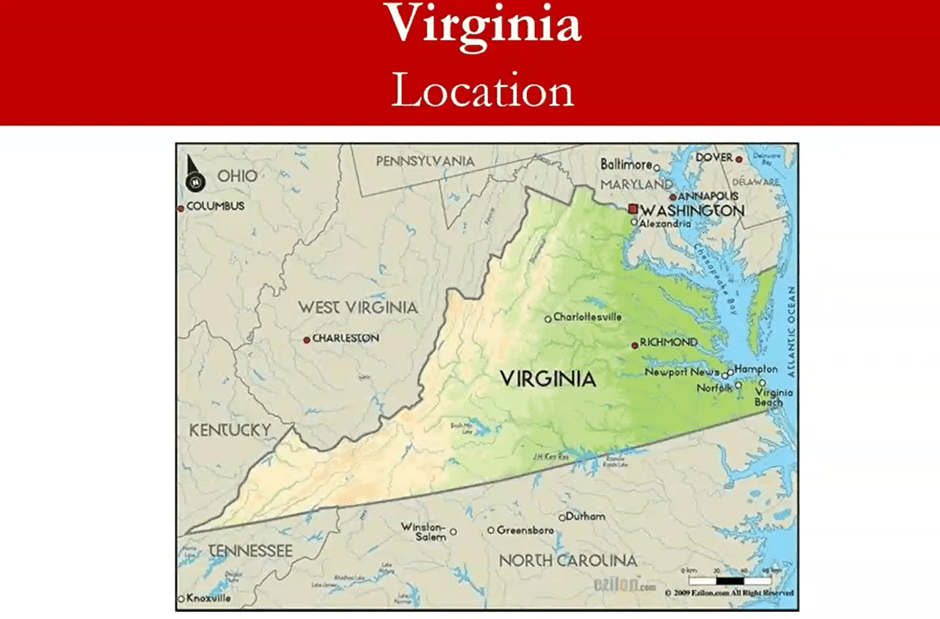
Lets look at where Virginia is located and its facts and figures:
- The size of Virginia is the equivalent of combining Scotland and Wales together.
- Blue Ridge and Allegheny Mountains: The 5 Peaks are all above 1500M.
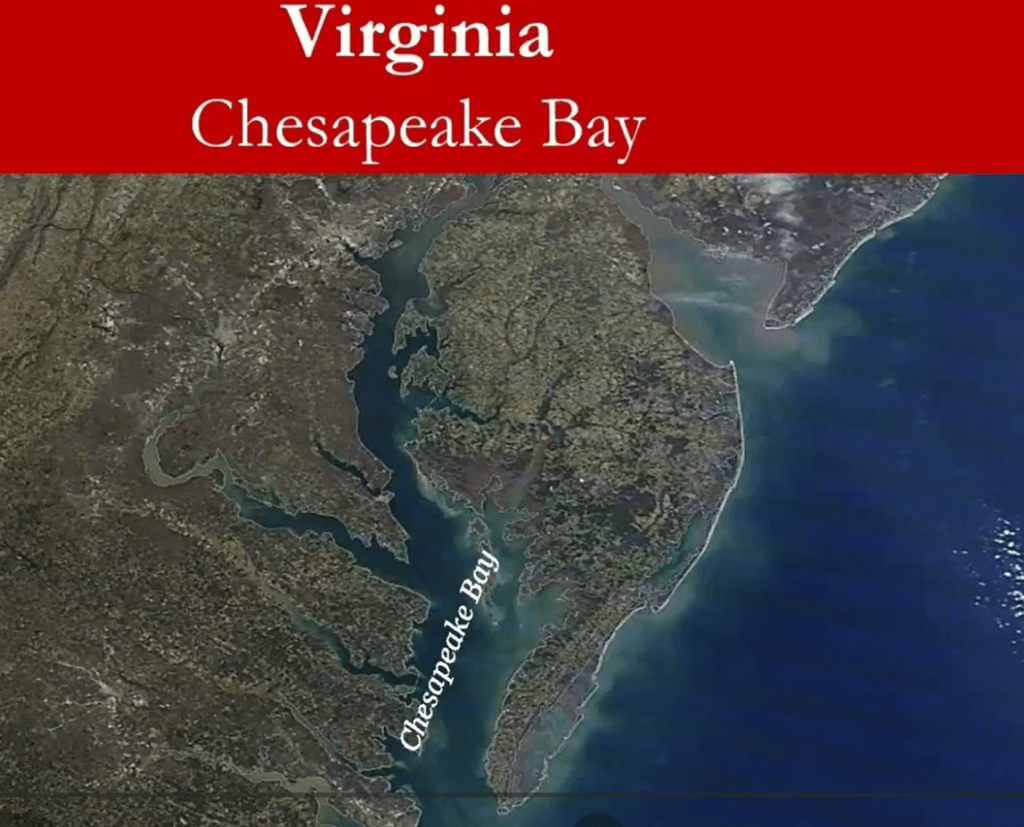
- Chesapeake Bay – Largest Estuary in the US (200KM Long) and the name is the 7th oldest named place to survive being renamed.
- Average rainfall 1100mm compared to the South of England (Hampsire, Sussex, Kent, Surrey) average 700-850mm.
AVAs
- The Middleburg Virginia
- Monticello
- The North Fork of Roanoke
- The Rocky Knob
- The Northern Neck George Washington Birthplace
- The Eastern Shore
- The Virginia Peninsula
The History of Virginia Wine
So, where does the name Virginia come from?
Queen Elizabeth I of England, known as the “Virgin Queen,” inspired the name Virginia. Sir Walter Raleigh was granted a royal decree to explore new territories, leading the first English expedition to North America in 1587. Although he never actually set foot on the land, the region was named Virginia in her honour after being claimed by sight from the sea.
Early Colonists: Ambition Meets Harsh Reality
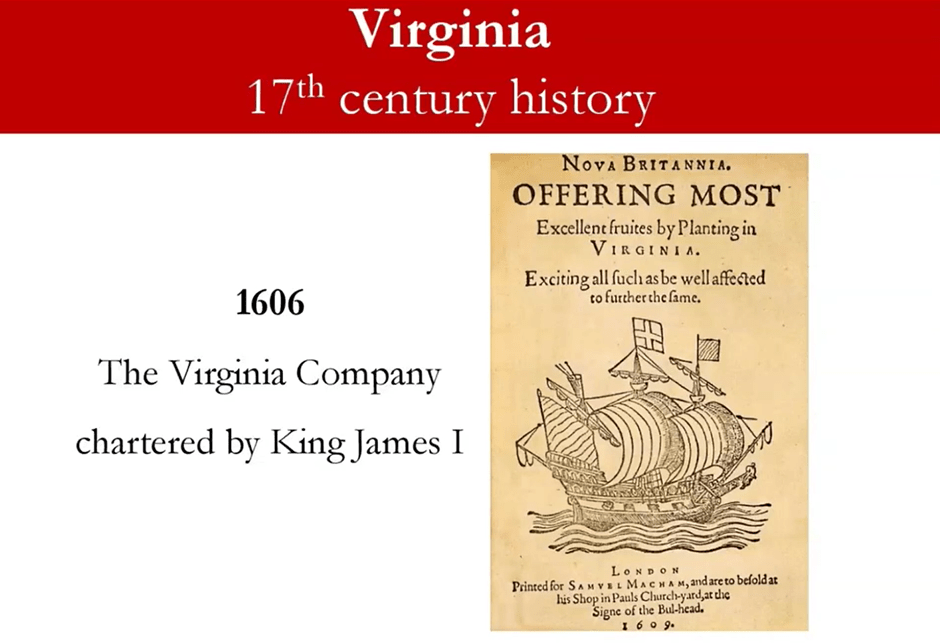
1606: The Virginia Company, backed by wealthy London shareholders, received the Royal Seal of Approval from King James I to charter a voyage and establish a colony in America. This marked the beginning of England’s early efforts to build a lasting presence in the New World.
1610: Lord De La Warr, the appointed Governor of the colony, sent samples of wine back to England. The wines were known to be sour, yet they were still shipped across the Atlantic, serving as some of the first examples of Virginia’s early attempts at winemaking.

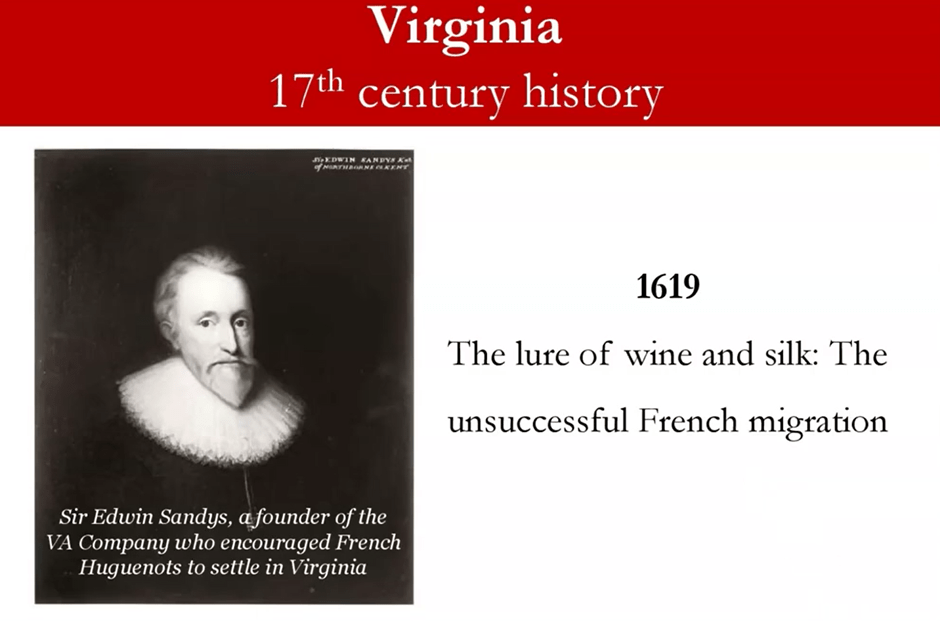
1619: The Lure of Wine Silk – A group of eight French winemakers and growers arrived in Virginia hoping to establish vineyards and make their mark. However, wine production offered little financial return at the time, while tobacco was thriving. Tempted by profit, they abandoned the vines and turned their focus to tobacco instead.
This decision went against the wishes of the English Empire, which had forbidden tobacco cultivation in favour of promoting wine and silk. The attempt at vine growing failed, and the French settlers were ultimately blamed for its lack of success.
1622: The First Exports of Virginian Wine to England and the Tariffs on Imported Wine – The first shipments of Virginian wine to England faced a long and treacherous journey across the Atlantic. Travelling in oak barrels, the wines did not survive the voyage. By the time they arrived, they had spoiled, oxidised and turned to vinegar. The English were deeply disappointed with the quality, and the wines were quickly dismissed.
Later, tariffs were introduced on wines imported from Europe into the American colonies, shaping how local production evolved and how Virginia’s wine identity began to take form.
Pioneers Who Refused to Give Up
1705: Robert Beverley was one of the first to actively promote winemaking in Virginia. He also made one of the earliest recorded tasting notes for local wines, describing them as having a “fox grape” character, a slightly musty aroma typical of native grape varieties at the time.
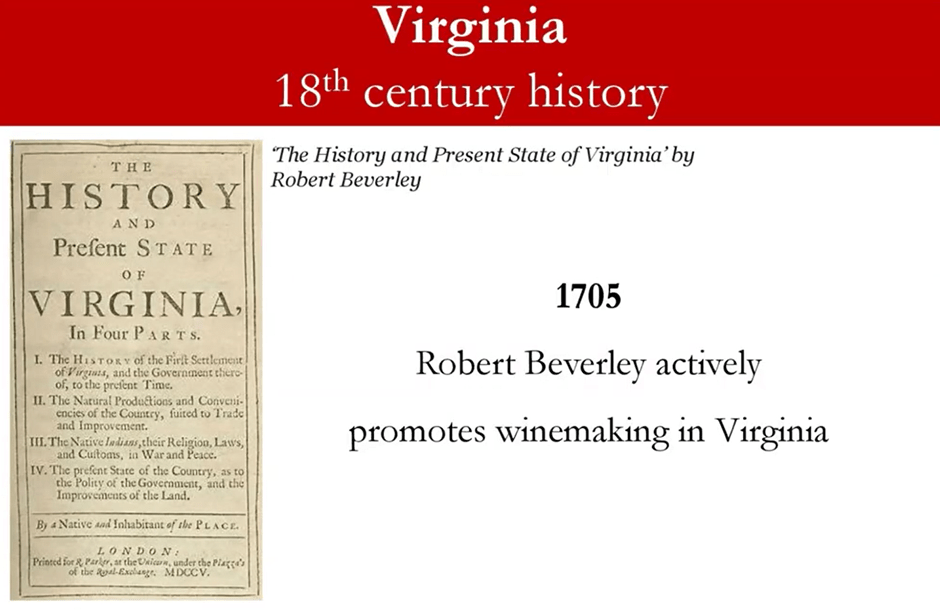
1709: Robert Beverley planted three acres of vines and built a small cave for storage, along with a press for winemaking. His efforts produced more than 400 gallons of wine, marking one of the earliest recorded examples of organised winemaking in Virginia.
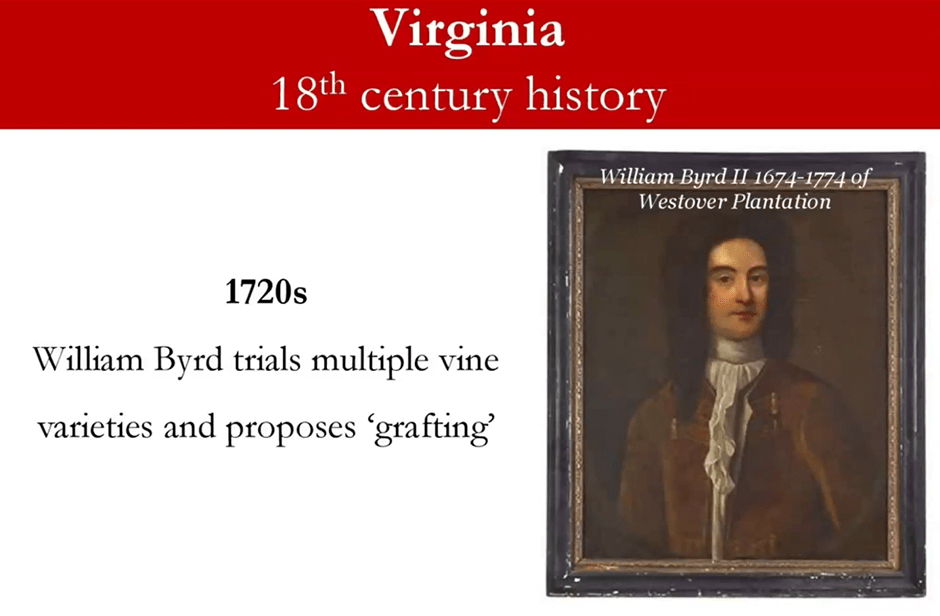
1720: His brother-in-law, William Byrd, also played a role in Virginia’s early wine story. He experimented with several vine varieties and even proposed the idea of grafting, though this approach was not widely accepted at the time.
Revolutionary Era: Great Minds, Same Problems
1759: George Washington invested in Maurice Pound’s winemaking efforts, showing early interest in developing Virginia’s wine potential. His support highlighted how even the most influential figures of the time believed in the promise of local viticulture.
1769: André Estave began planting vines near Williamsburg, facing the same challenges as those before him. Despite his efforts, issues with climate, soil and disease continued to make successful viticulture difficult in early Virginia.

1772: The vines continued to fail, much like during William Byrd’s earlier attempts. This left many wondering why success in Virginia’s vineyards seemed so difficult to achieve.
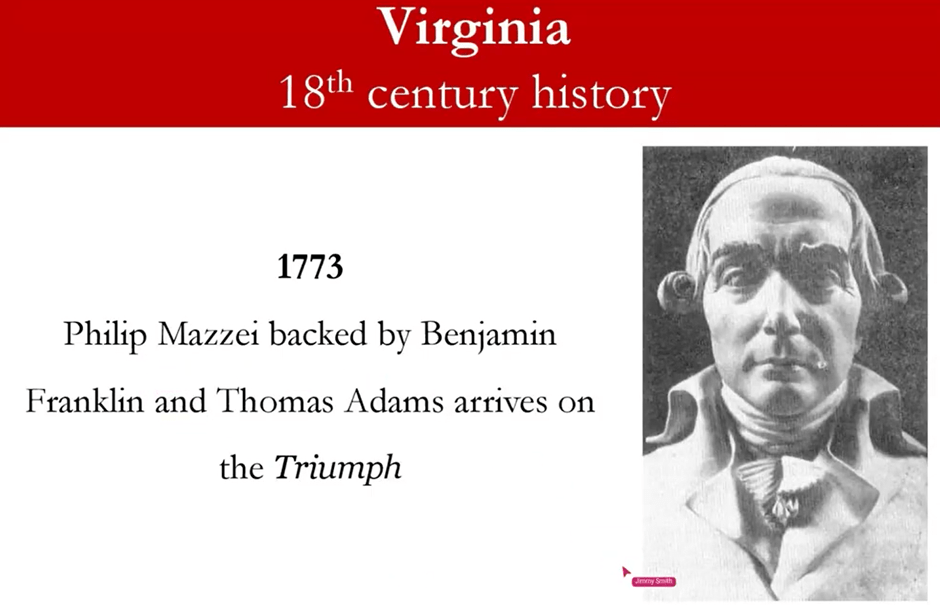
1773: The Italian viticulturist Philip Mazzei, supported by Benjamin Franklin and Thomas Adams, arrived in Virginia aboard the ship Triumph. He was employed to establish vineyards and produce wine for the colony. However, even under his care, the vines struggled to survive, facing the same challenges of poor adaptation and disease at Thomas Jefferson’s estate.
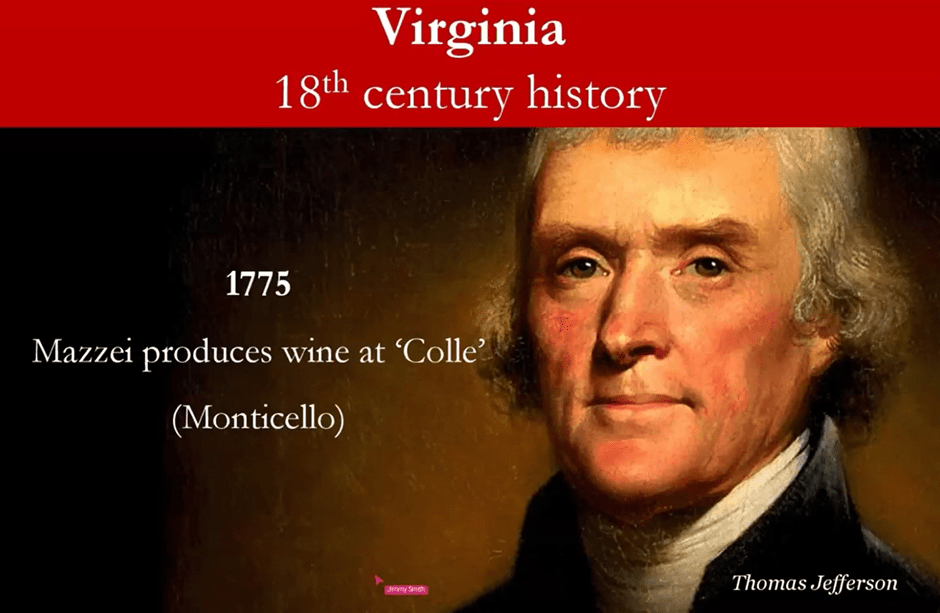
1775: Mazzei produced his wines in the hilly area known as Colle, near Charlottesville. Today, this same region is known as Monticello, one of Virginia’s most historic and respected wine-growing areas.
1779: Mazzei eventually returned to Italy, and it was later discovered that the persistent vine failures were caused by phylloxera. This tiny root-dwelling pest would go on to become one of the greatest challenges in global viticulture.
Breakthroughs and Setbacks
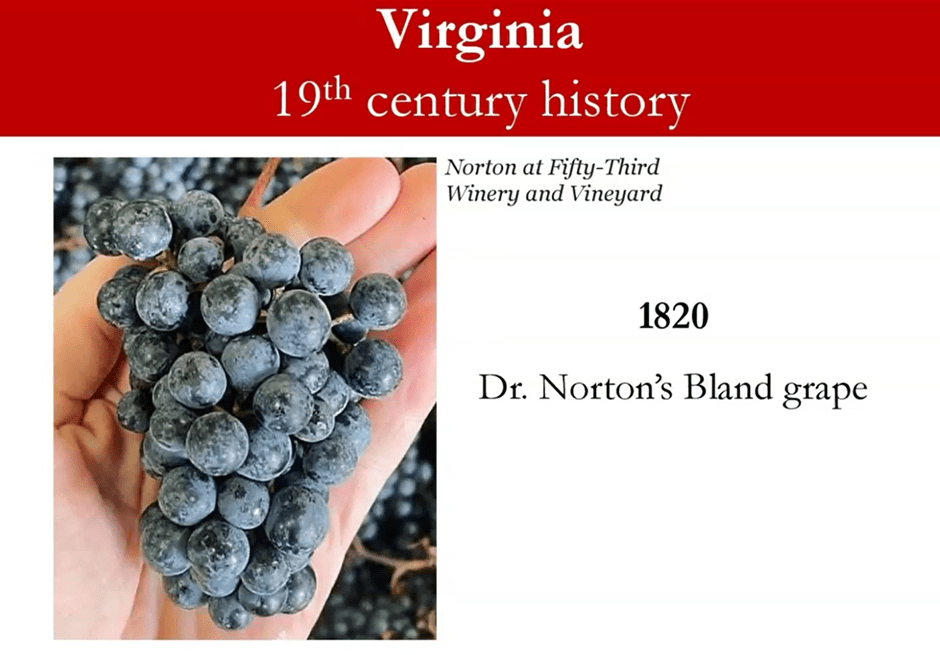
1820: Dr. Norton’s discovery of the Bland grape marked a turning point for Virginia wine. Originally known as the “Bland” grape, it was later renamed “Norton” and became one of America’s first successful native varieties, well suited to the region’s growing conditions.
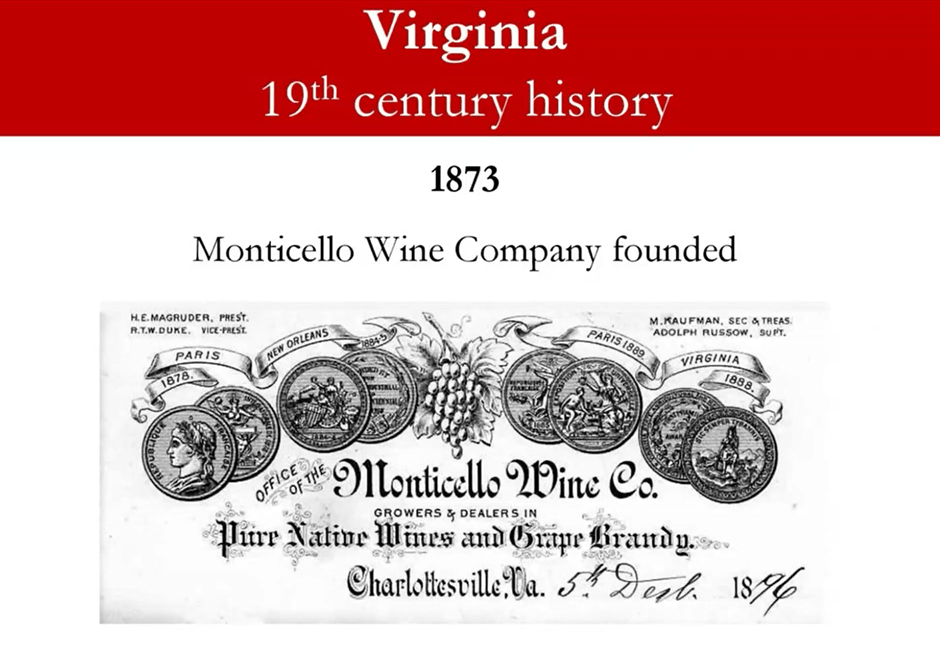
1873: The Monticello Wine Company was founded and quickly gained international recognition, winning numerous awards in France and Italy. These achievements helped put Virginia on the global wine map and proved that high-quality wines could be produced on American soil.
1890: Wine production in Virginia dropped significantly due to widespread disease, falling from 460,000 gallons to just 38,000. It was a major setback that highlighted how fragile early viticulture could be in the region.
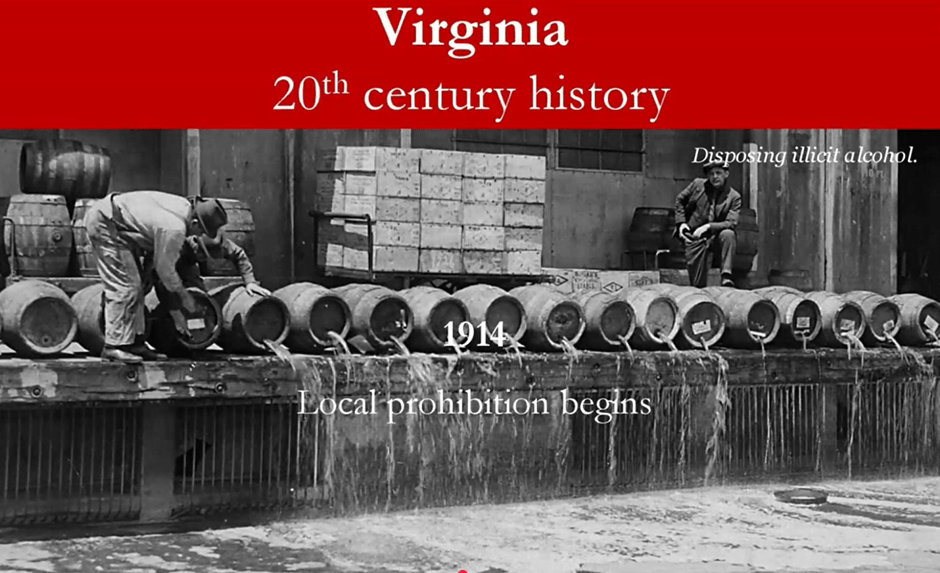
1914: When local prohibition took effect, Virginia became a dry state. Any wine that had been produced was discarded, marking one of the lowest points in the region’s winemaking history.
The Modern Virginia Wine Industry Emerges
1976: Winemaker Gianni Zonin revived Mazzei’s vision for Virginia, using a similar approach to vine growing but with far greater success. With a better understanding of the disease challenges that had once devastated vineyards, he was able to establish healthy vines and produce wines that finally fulfilled Virginia’s early promise.
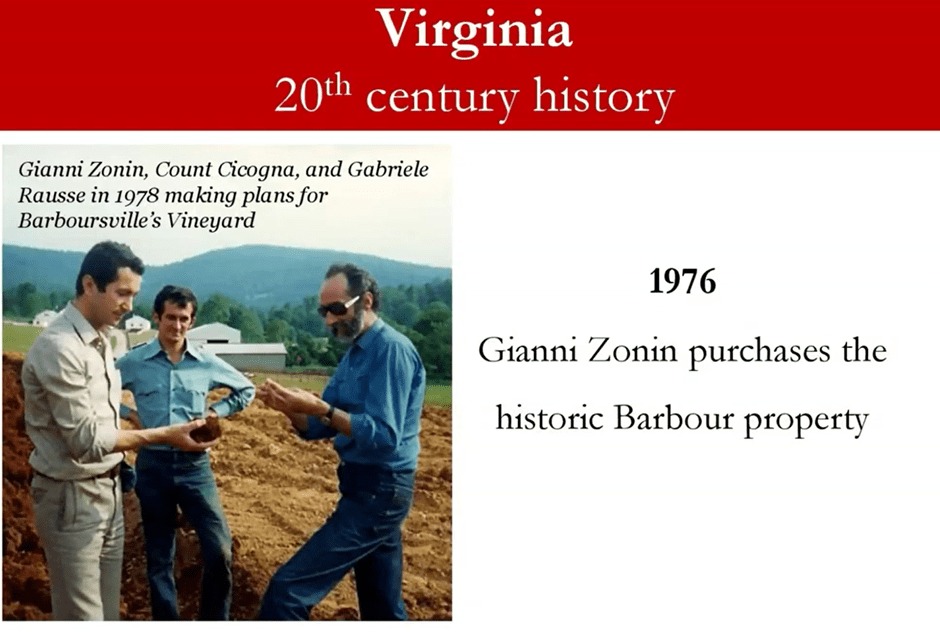
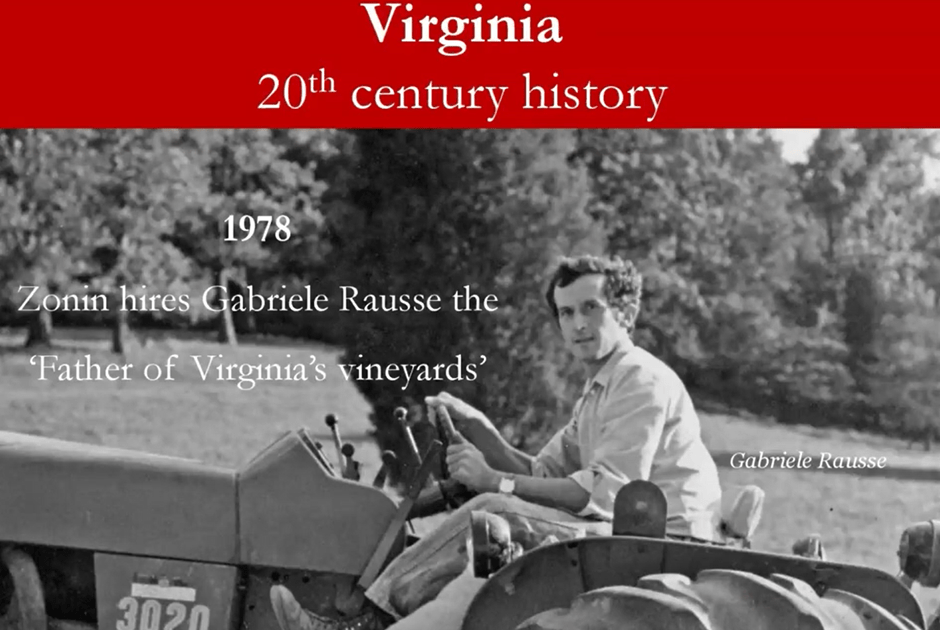
1978: Zonin hired Gabriele Rausse, who became known as the “Father of Virginia’s Vineyards.” His expertise and dedication played a key role in re-establishing viticulture in the region and setting the foundations for the thriving wine industry Virginia has today.
1984: In 1984, Virginia established its first official American Viticultural Area (AVA), named Monticello. This recognition marked a major milestone, celebrating the region’s history, distinct terroir and growing reputation for quality wine.
It all paid off in the end
From the days of the “Virgin Queen” and Sir Walter Raleigh’s first sighting of the New World, Virginia’s path to producing fine wine has been long and determined. Centuries of failed vines, disease and disappointment eventually gave way to discovery, science and success.
The real pioneers who shaped this transformation were Philip Mazzei, Dr. Norton and Gianni Zonin. Without their vision and perseverance, Virginia’s wine story might have ended very differently.
The creation of the first AVA, Monticello, secured Virginia’s place on the wine map. It stands as proof that persistence, innovation and belief in the land can turn centuries of struggle into something truly extraordinary.
With that foundation laid, it felt fitting to explore the wines that represent Virginia today. From native grapes to European classics, each bottle tells a story shaped by the region’s history, climate and people. In Part 2, I’ll take you through the six wineries and nine wines we tasted, with my personal notes and reflections from this fascinating masterclass.
 Sharing my wine knowledge