Runner Who Loves Wine. Sharing my wine knowledge

BLOGS, REVIEWS AND RECOMMENDATIONS ABOUT THE WINE INDUSTRY SUCH AS EVENTS, BOTTLES, COMPANIES, AND PERSONAL EXPERIENCES.

Author: dmj84nowakowska

  • Jimmy’s Best of Virginia Part 2 ‘The Wines’

    Jimmy’s Best of Virginia Part 2 ‘The Wines’

    Now it’s time to dive into the wines themselves. We tasted nine impressive bottles from across Virginia, each one revealing something new about this remarkable region. To really understand their story, you need to know the people behind them and the places they call home. Every glass had a sense of heritage and purpose that made you want to learn more.

    I’ve included my tasting notes and a look at each winery, so you can see what makes Virginia such an exciting place for wine right now.

    Fifty-Third Winery
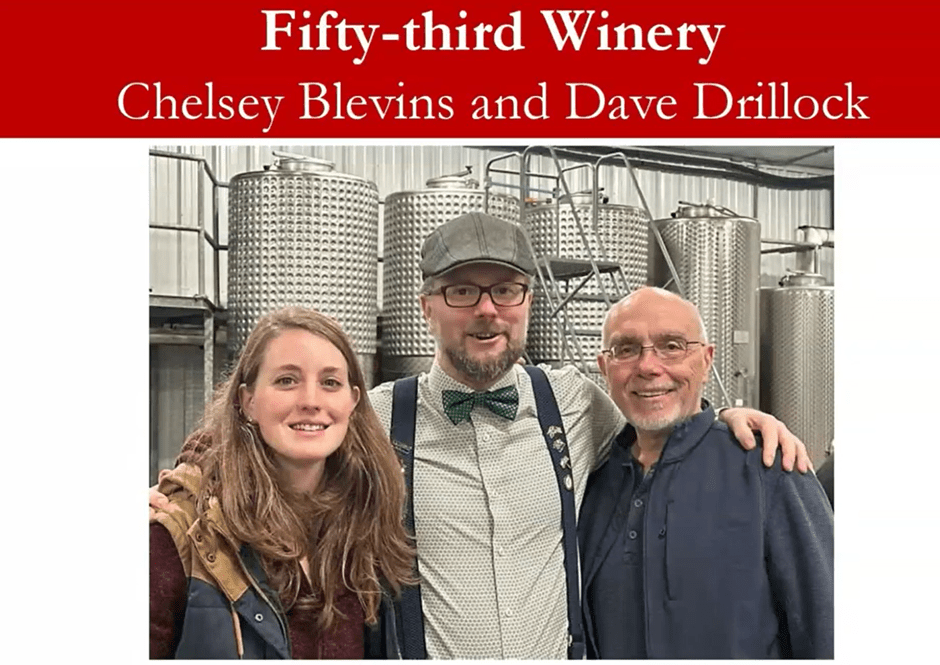
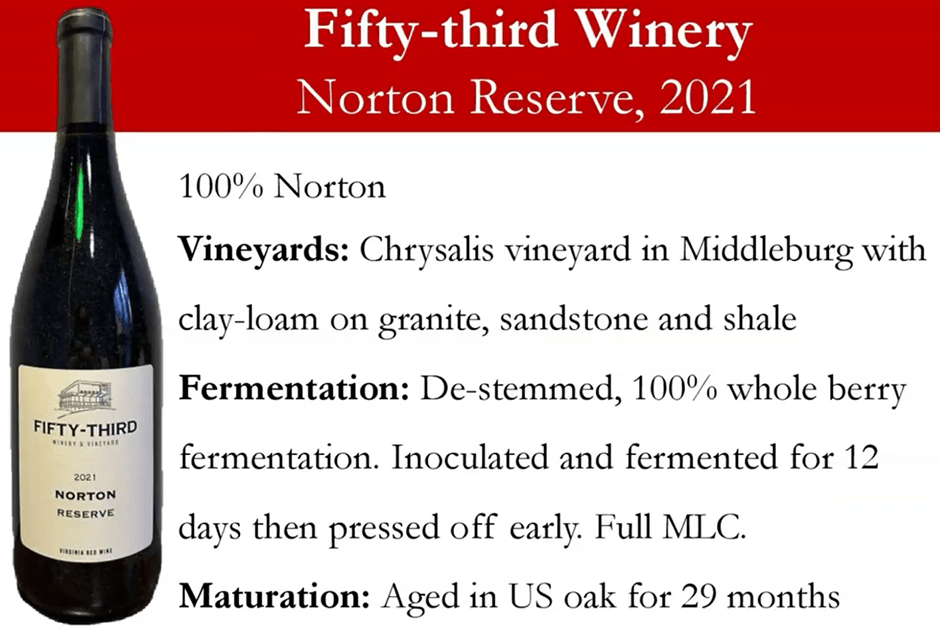
    David and Susan Drillock took over the winery back in July 2015, with a simple but powerful mindset: ‘To always push themselves to do better’. Their small farm winery sits near Lake Anna, surrounded by the quiet beauty between Richmond, Fredericksburg, and Charlottesville.

    They focus their energy on two vineyards, each with its own character. The Louisa County vineyard has Nason silt loam soils that bring freshness and structure, while the Albermarle/Green County vineyard rests on red clay, adding depth and warmth to the wines.

    Their winemaker, Chelsey Blevins, is the real driving force. She knows how to handle the challenging Norton grape, turning it into something truly memorable and proving that Virginia’s native varieties can shine when treated with skills and care.

    Barboursville Vineyard
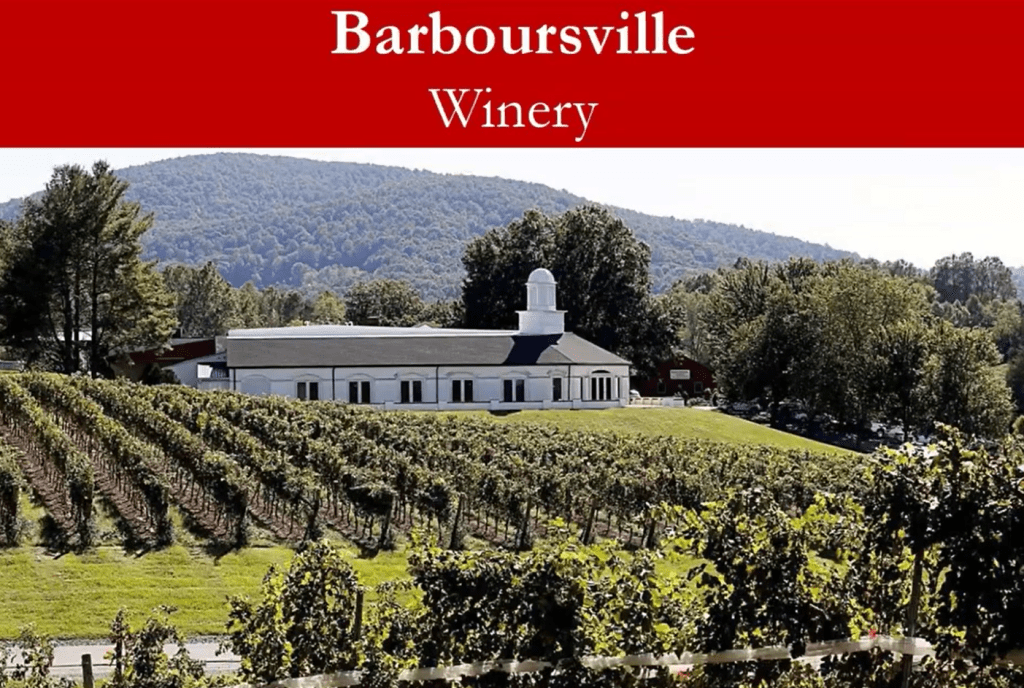
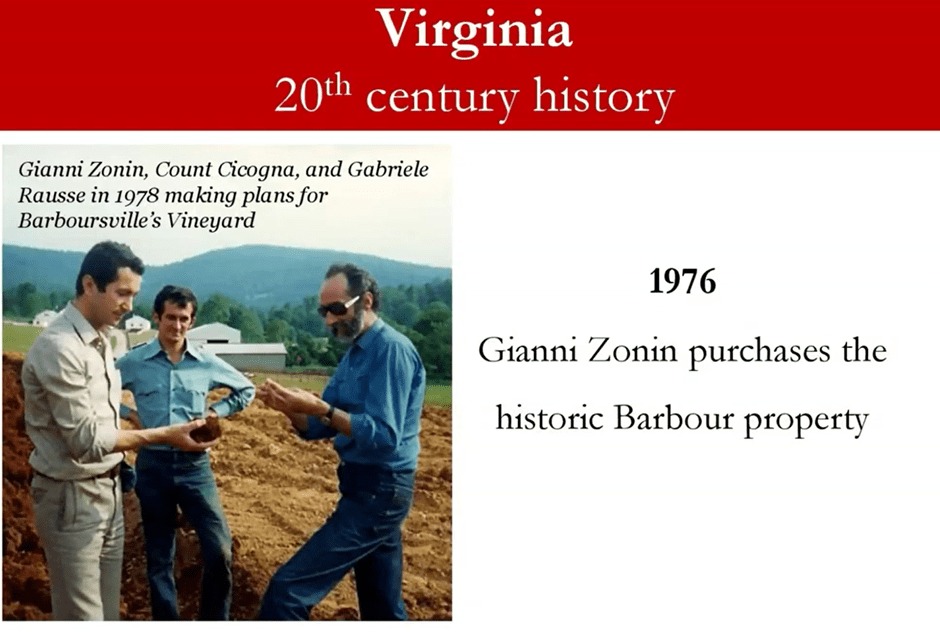
    It all began on the 13th April 1976, nearly fifty years ago, when winemaker Gianni Zonin set his sights on Virginia. He believed the region could produce wines to rival the best and wanted to prove it. Inspired by Phillip Mazzei, who had once tried and failed to establish vines here (long before anyone knew phylloxera was to blame), Zonin decided to continue what Mazzei started.

    He purchased the historic Barbour property, once owned by James Barbour, a close friend and colleague of Thomas Jefferson. The estate carried history in its soil, and Zonin saw its potential.

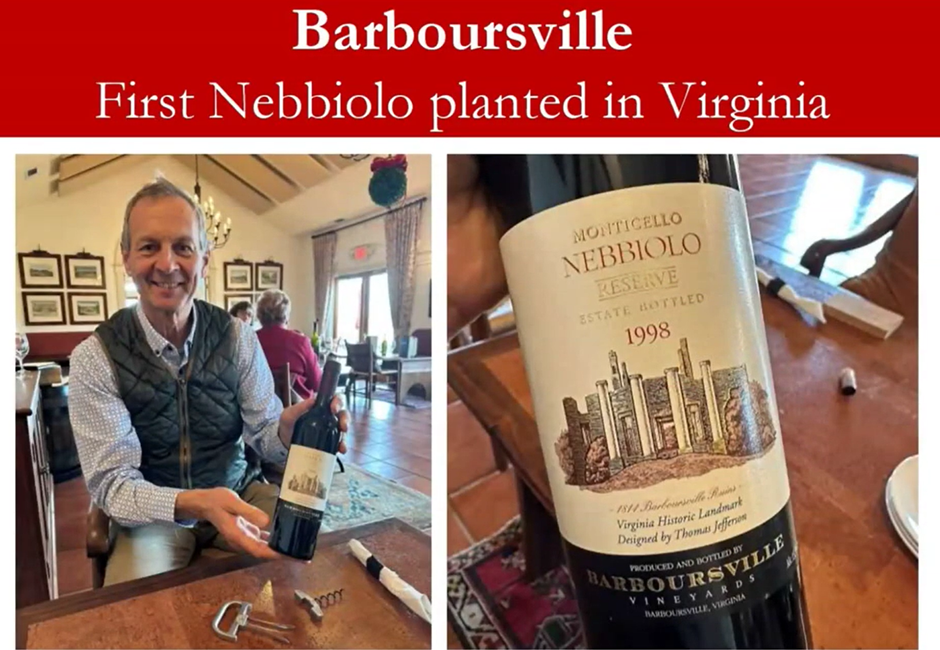
    Today, winemaker Luca Paschina leads the way. He planted the first Nebbiolo vines in 1991 and produced the 1st vintage in 1998. At first, the wine didn’t gain much attention, selling for around $40 a bottle. Now, the same Nebbiolo will cost an average of $250, proving how far Virginia has come and how vision, patience and respect for the land can truly pay off.
    Michael Shaps Wineworks
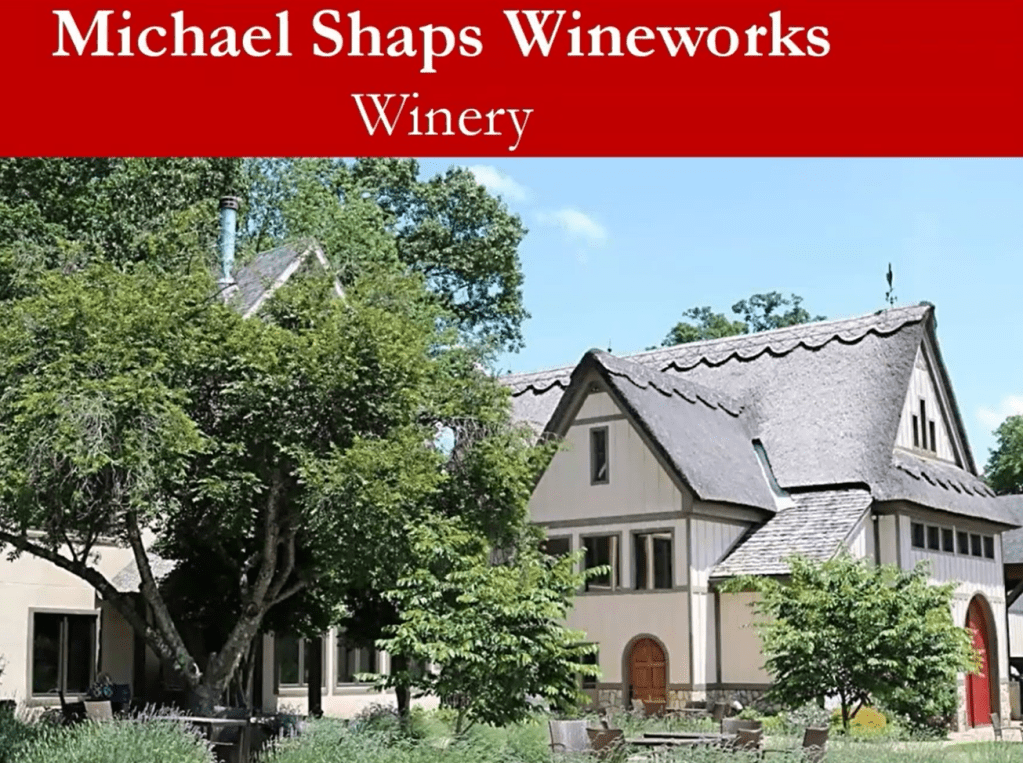
    Founded in 2007 and located just 12 miles from Charlottesville, Michael Shaps Wineworks has become one of Virginia’s true benchmarks. Michael set out on a journey to uncover the best vineyard sites the state had to other, and his dedication led him to Shenandoah Vineyards, known for its limestone soils that bring elegance and minerality to the wines.

    He also sources from Honah Lee and his own estate vineyard, each site adding a distinct character and complexity to his range. Every bottle reflects a clear vision of craftmanship, respect for terroir and dedicated commitment to quality.
    Lightwell Survey

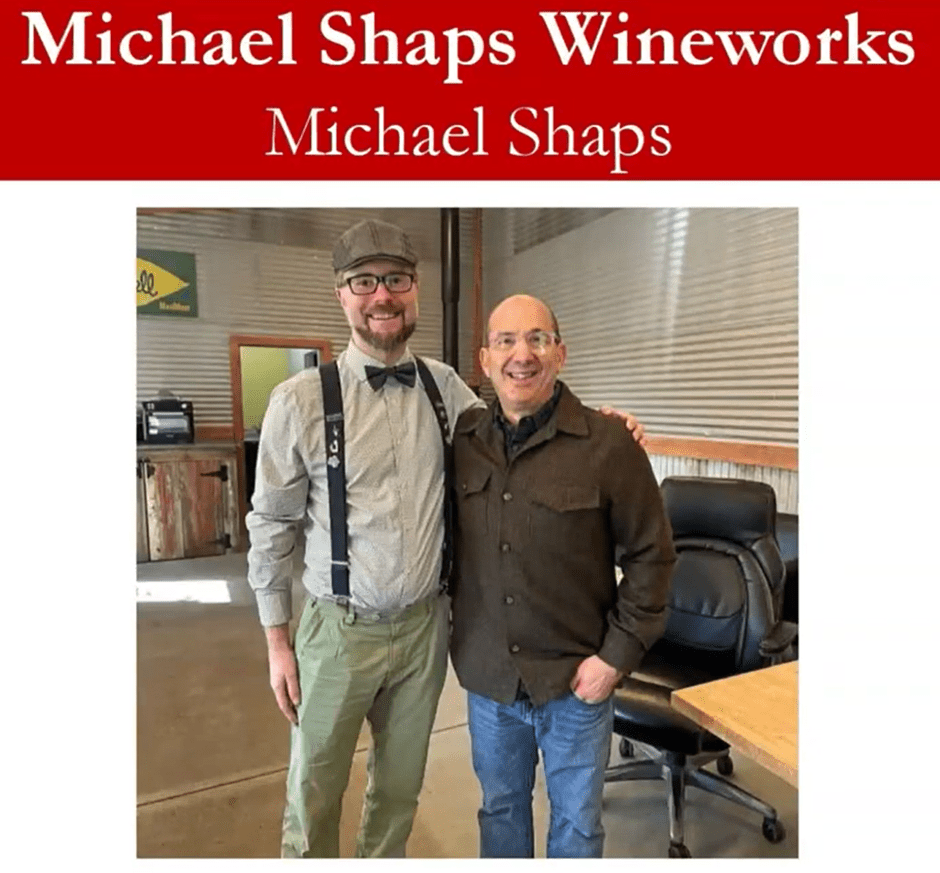
    Ben Jordan, founder of Commonwealth Crush, really stood out to me. He has created something special in Virginia, a safe and supportive space for winemakers to grow. Based in an old-style factory, Ben works with around a dozen winemakers, many from non-traditional or disadvantaged backgrounds, giving them the opportunity to create and learn in a hands-on environment.

    It is more than winemaking. It is community building. His approach brings fresh voices into Virginia wine and shows how collaboration and mentorship can be as powerful as terroir itself.

    King Family
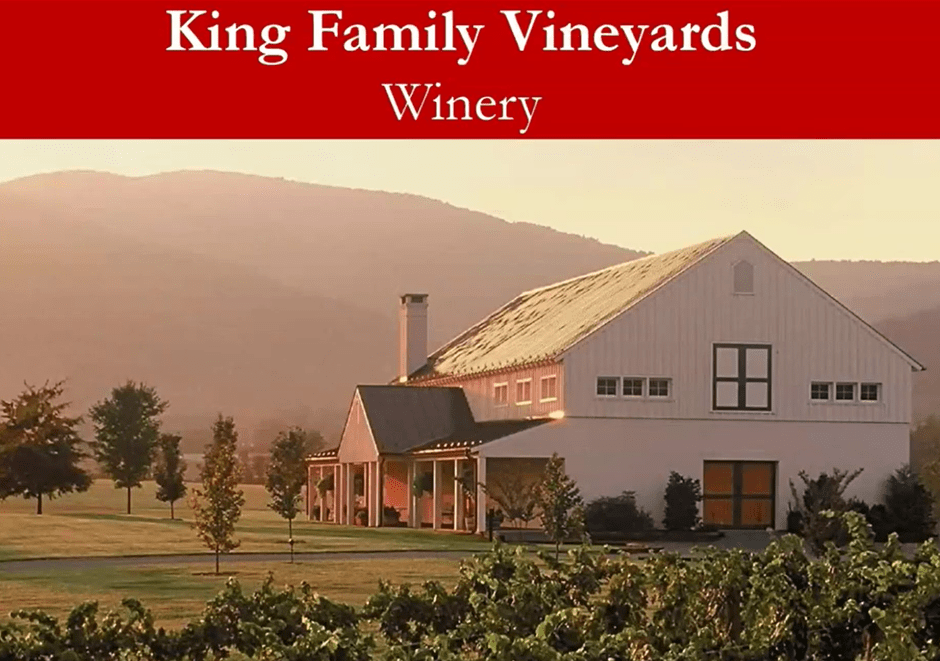
    The King Family purchased their 320-acre estate in 1995, not yet realising how special their land really was. That changed when Tom Vandenberg approached them to lease 10 acres for a vineyard. He recognised the potential for growing quality grapes, and that simple request sparked something bigger.

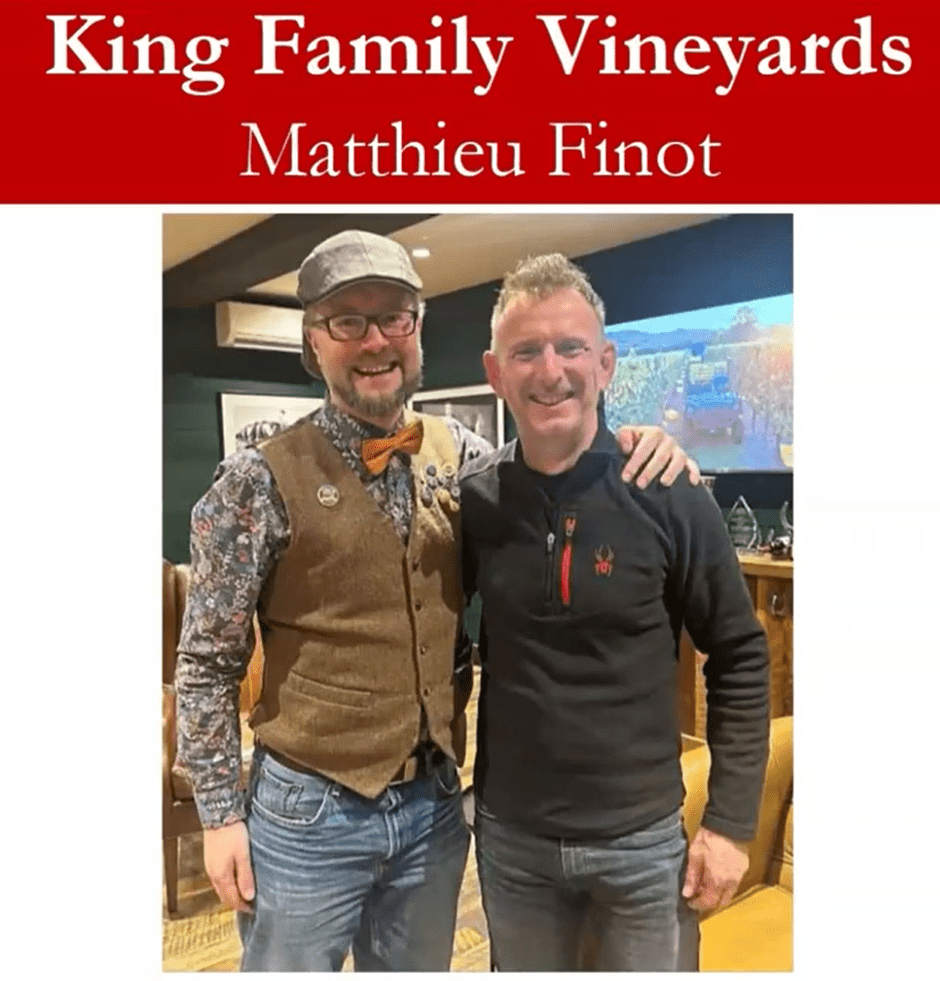
    The family decided to plant their own vines, first selling grapes to others before producing wines under their own name. In 2003, winemaker Matthieu Finot joined the team, bringing his French expertise and a fresh perspective. His influence has shaped the wines into something elegant, balanced and truly expressive of Virginia.
    Pollak Vineyards
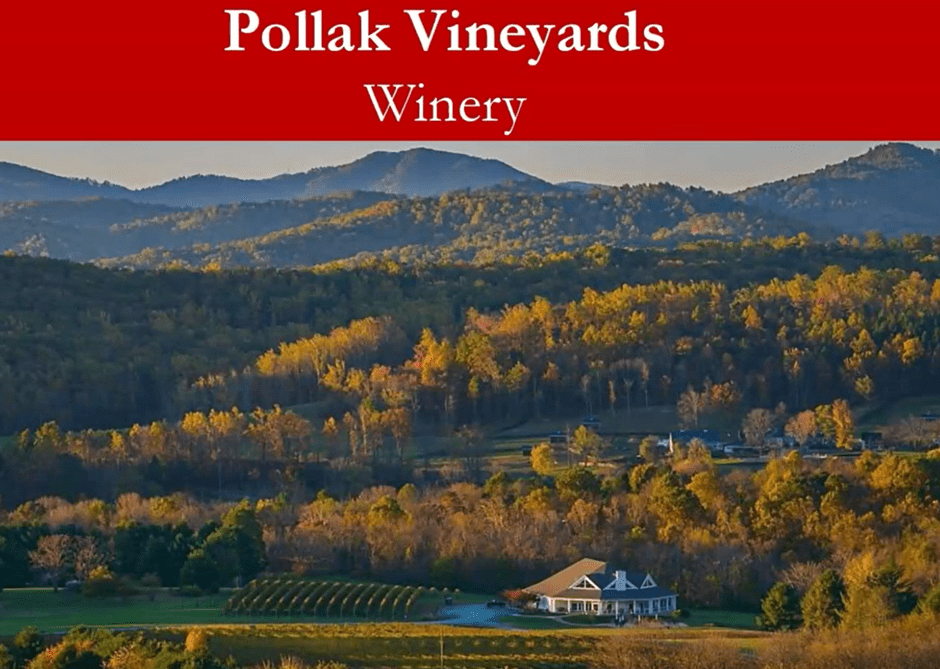
    Margo and David Pollak founded Pollak Vineyards with a clear goal, to create wines that reflect both precision and place. Their winery was built in 2008 and quickly became known for producing exceptional Bordeaux-style blends that highlight Virginia’s potential.

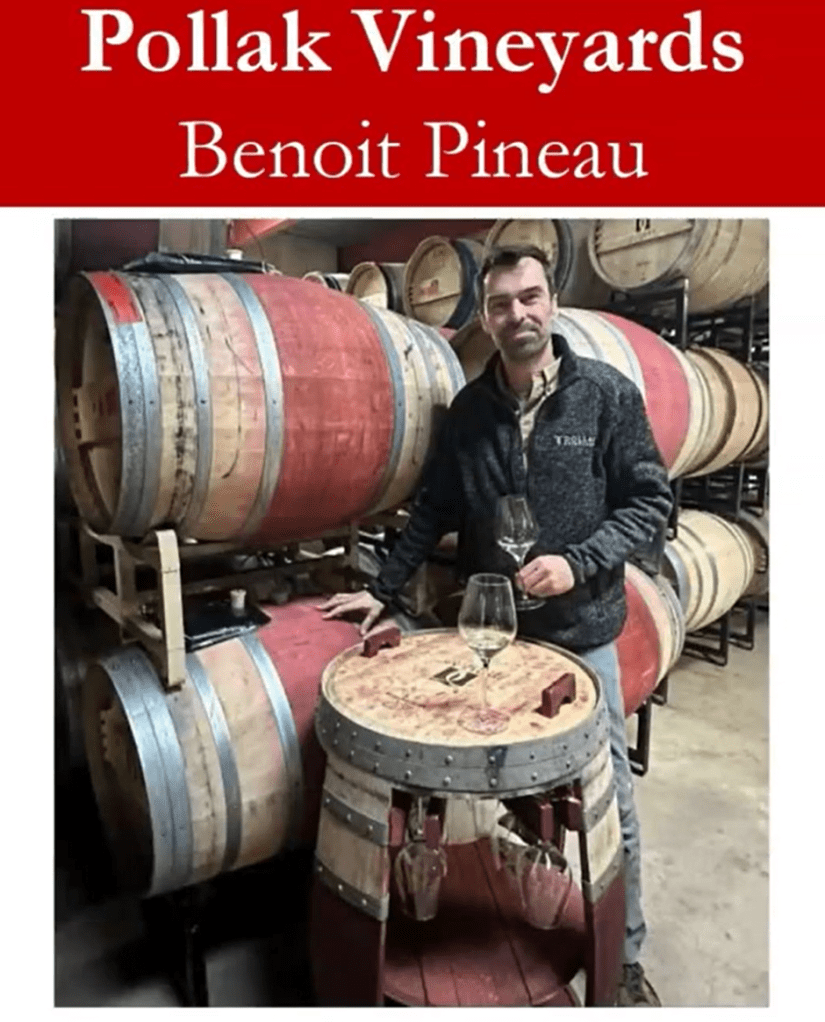
    In 2011, winemaker Benoit Pineau joined the team, bringing his Loire Valley experience to the heart of their Cabernet Franc production. His influence has added freshness, balance and an authentic Old-World touch that gives these wines real depth and character.
    Tasting Notes:

    Wine 1: Prune, dark fruits, meaty, liquorice, cedar .
    Wine 2: White pepper, forest, leather.
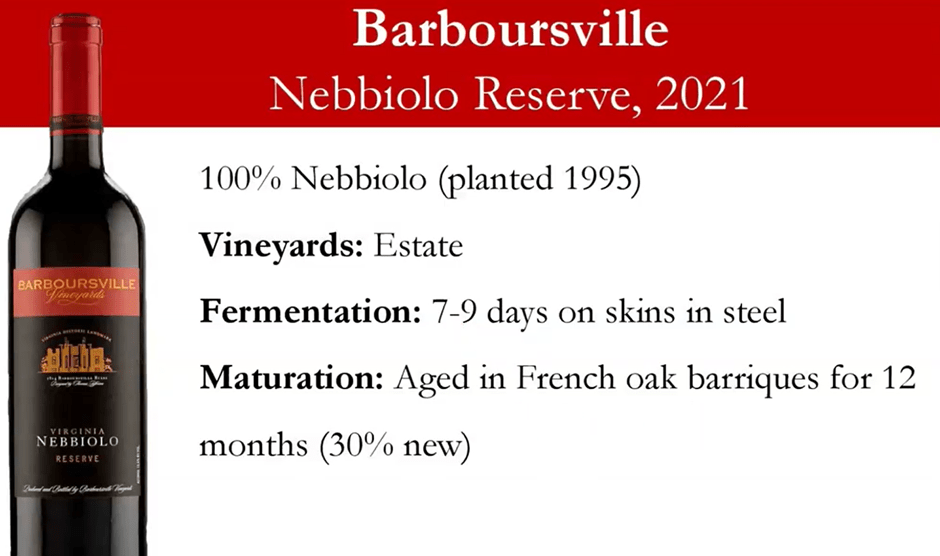
    Wine 3: Salty from the chalky soils, herbs and citrus, very fresh.
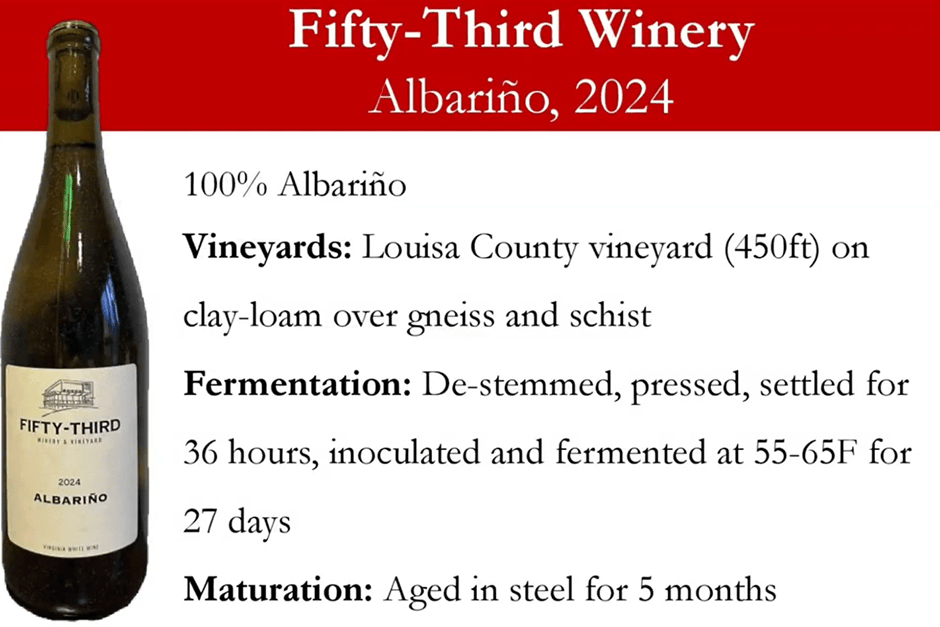
    Wine 4: Creamy, nutty and almond.

    Wine 5: Honey, Pineapple, apricot
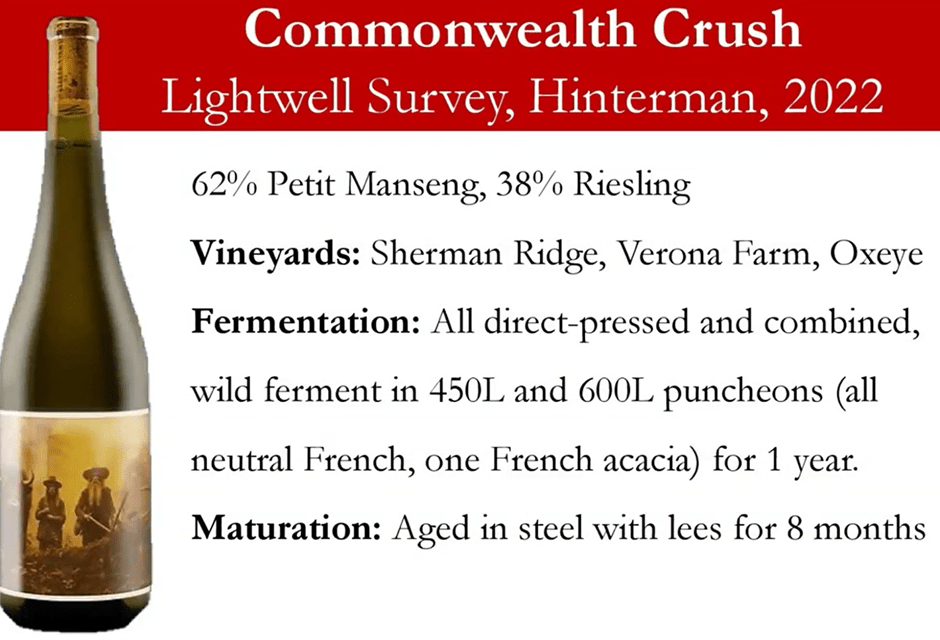
    Wine 6: Purple flower, raspberry, cherry.
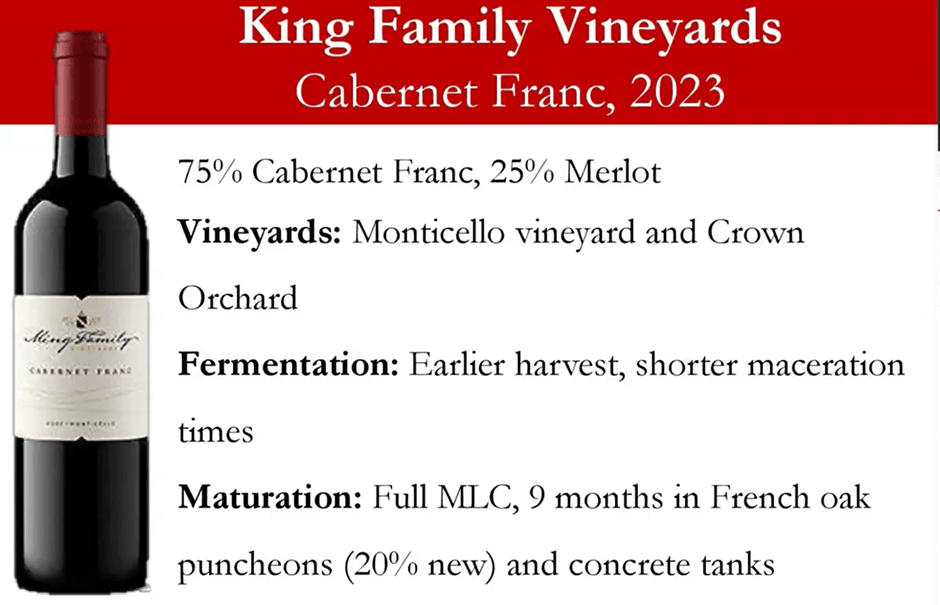
    Wine 7: Earthy, leather, tomato stalk and black pepper
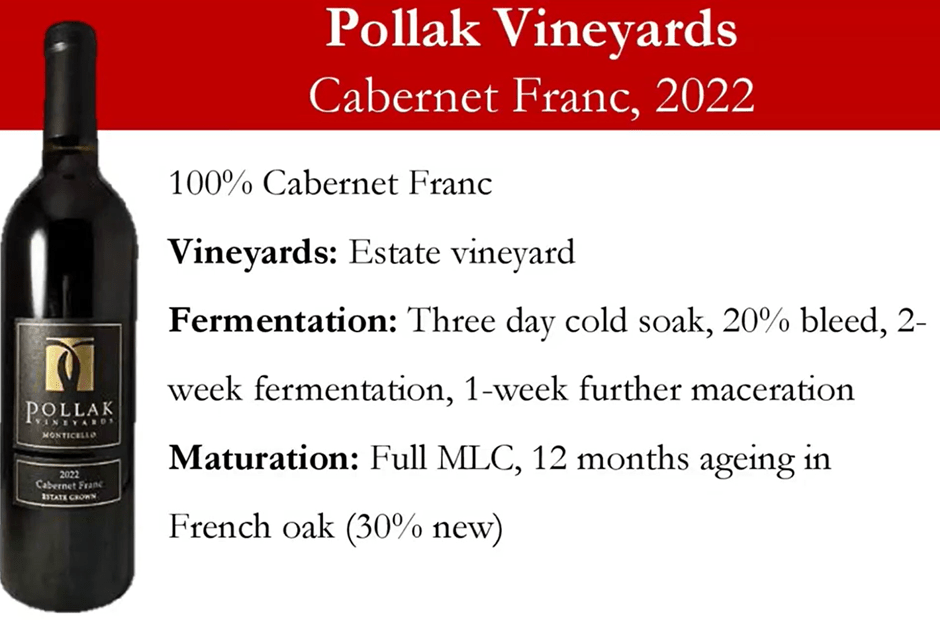
    Wine 8: Beetroot, vanilla from Iron Clay soils, menthol
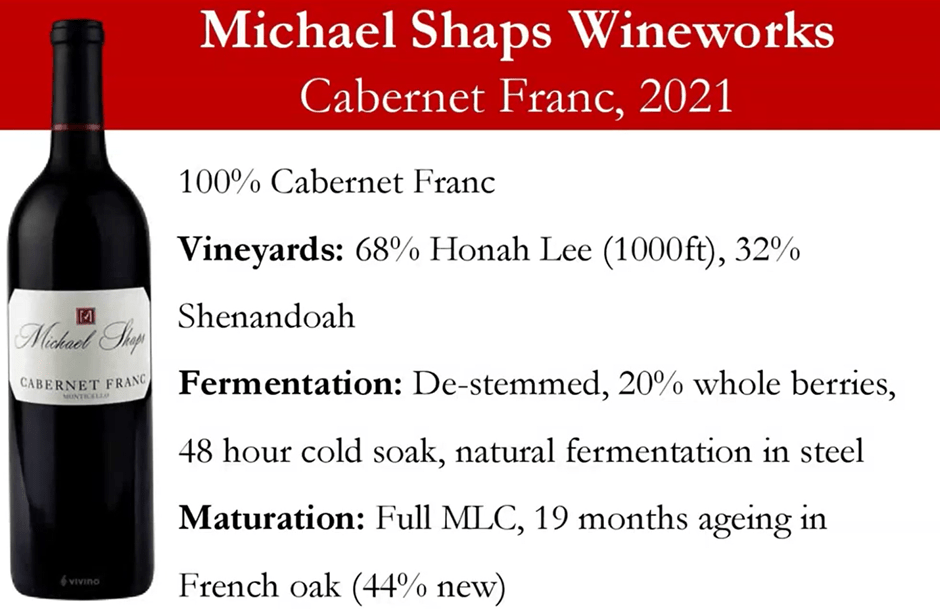
    Wine 9: Purple flower, spice, cloves.
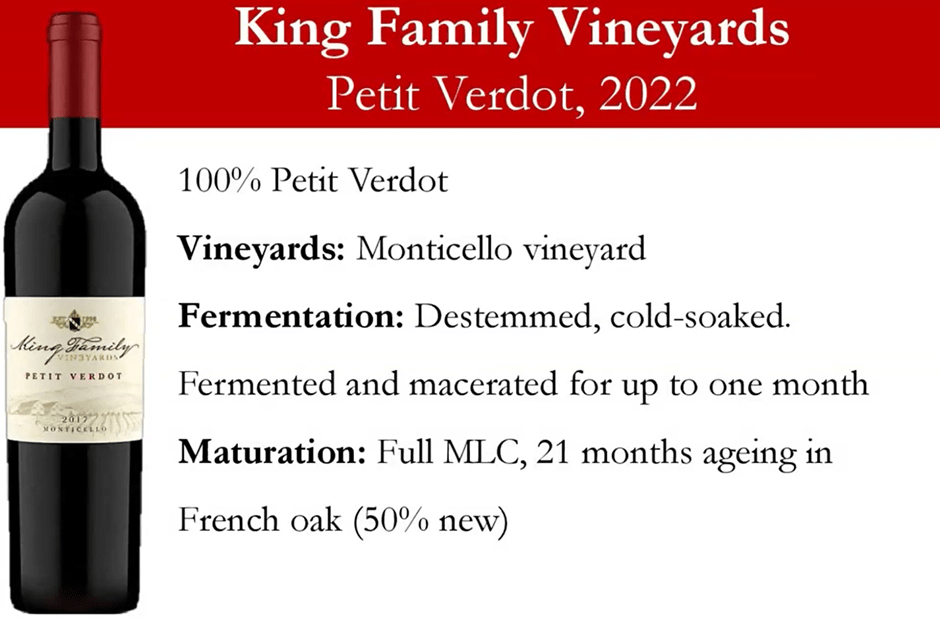
    Tasting through the wines of Virginia with Jimmy was a real eye-opener. Every bottle had a story to tell, and you could sense the pride and craftsmanship behind each pour. The Norton was the real surprise for me. Bold, expressive, and beautifully handled by Chesley, a winemaker with clear talent and vision. It completely changed how I view American grape varieties.

    The Nebbiolo showed elegance and depth, proof of how far Virginia’s winemaking has come. The Chardonnay stood out for me too, perfectly balanced and textured, offering remarkable quality for its price. I would happily fill my suitcase with these bottles if I ever made it over there. The Cabernet Franc gave a clear taste of place, each sip revealing another layer of the region’s identity, while the Petit Verdot closed the tasting with richness, structure and real promise.

    This tasting was more than discovering wines. It was about understanding a region, its people and the potential behind every vineyard. Virginia might not have been on my radar before, but it certainly is now.

    What I enjoy most about Jimmy’s events is the depth of knowledge he brings. He always weaves in the history, context and personality of a region, and his enthusiasm is contagious. I found myself wanting to know more, listening, learning and sipping along with every slide. The introduction to new grape varieties and the stories of perseverance made this masterclass one to remember. Virginia is a fascinating wine region and one I will be keeping a close eye on from now on.

    All media and information for these two blogs were gathered from Jimmy Smith’s online masterclass and the official winery websites.

  • Jimmy’s Best of Virginia Part 1 ‘Climate, History and AVAs’

    Jimmy’s Best of Virginia Part 1 ‘Climate, History and AVAs’

    I’ve always believed wine has the power to surprise, and this online masterclass proved it. When Jimmy introduced us to the wines of Virginia, I didn’t know what to expect. The US hides so many wine secrets, but this region stood out. Virginia isn’t a newcomer. It’s a rediscovered gem with deep roots, unique grape varieties and winemakers creating something remarkable.

    During this session, we explored nine wines from six wineries, each with a story that connected people, places and passion. To cover it properly, I’ve split my reflections into two parts:

    • Part 1 looks at Virginia’s location, its AVAs and the history that shaped its wine scene.
    • Part 2 will highlight the six wineries and the nine wines we tasted, with my personal notes and key takeaways from the masterclass.

    It you’re ready to discover an American wine region full of character and charm, this is where the adventure begins.

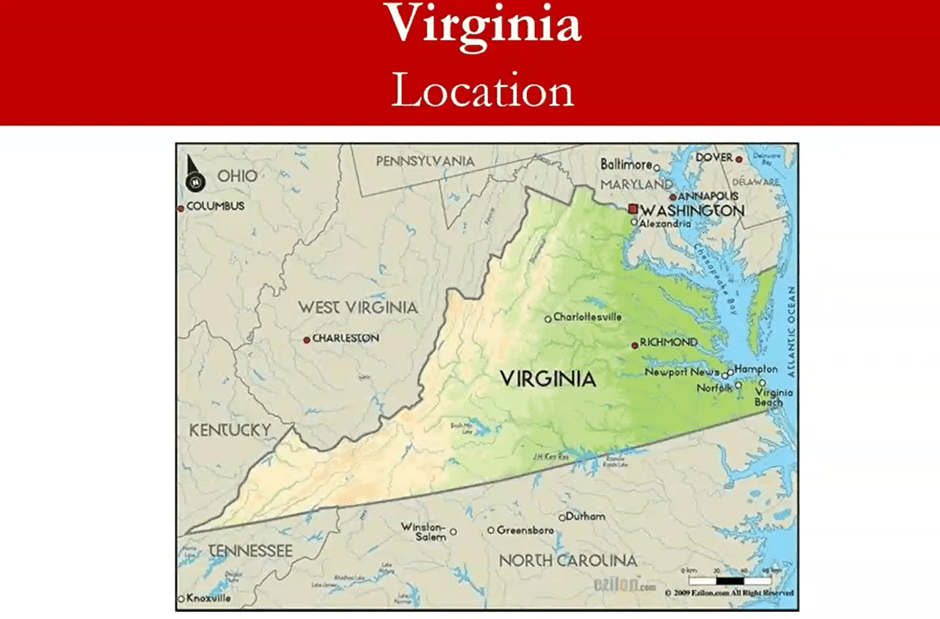
    Location/ Climate ‘facts and figures’

    Lets look at where Virginia is located and its facts and figures:

    • The size of Virginia is the equivalent of combining Scotland and Wales together.
    • Blue Ridge and Allegheny Mountains: The 5 Peaks are all above 1500M.
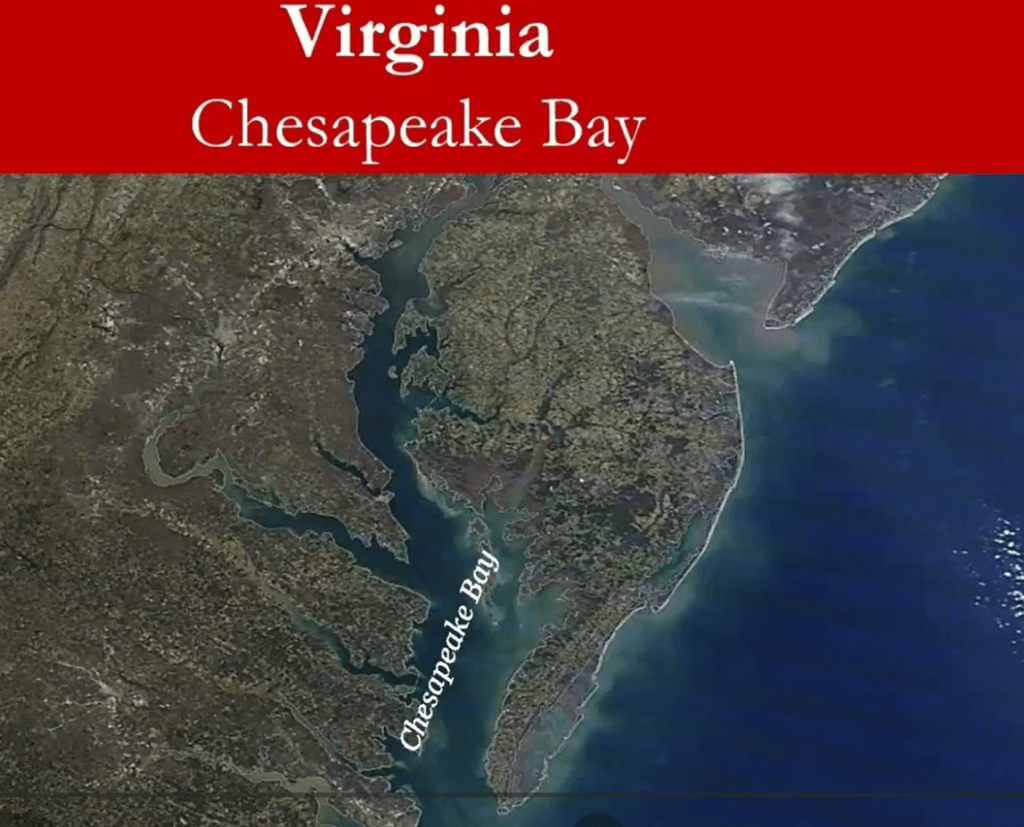
    • Chesapeake Bay – Largest Estuary in the US (200KM Long) and the name is the 7th oldest named place to survive being renamed.
    • Average rainfall 1100mm compared to the South of England (Hampsire, Sussex, Kent, Surrey) average 700-850mm.

    AVAs

    • The Middleburg Virginia
    • Monticello
    • The North Fork of Roanoke
    • The Rocky Knob
    • The Northern Neck George Washington Birthplace
    • The Eastern Shore
    • The Virginia Peninsula

    The History of Virginia Wine

    So, where does the name Virginia come from?

    Queen Elizabeth I of England, known as the “Virgin Queen,” inspired the name Virginia. Sir Walter Raleigh was granted a royal decree to explore new territories, leading the first English expedition to North America in 1587. Although he never actually set foot on the land, the region was named Virginia in her honour after being claimed by sight from the sea.

    Early Colonists: Ambition Meets Harsh Reality

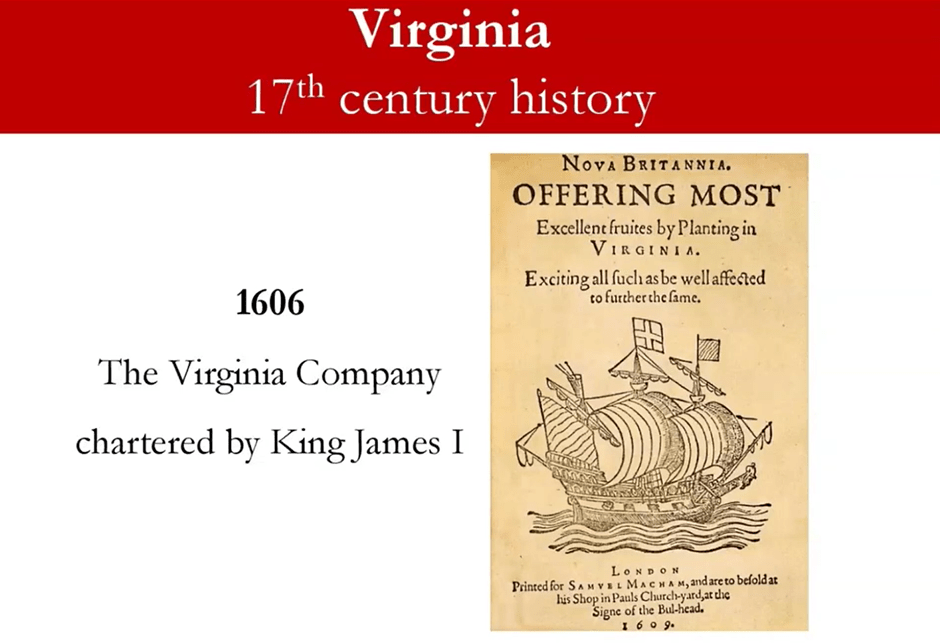
    1606: The Virginia Company, backed by wealthy London shareholders, received the Royal Seal of Approval from King James I to charter a voyage and establish a colony in America. This marked the beginning of England’s early efforts to build a lasting presence in the New World.

    1610: Lord De La Warr, the appointed Governor of the colony, sent samples of wine back to England. The wines were known to be sour, yet they were still shipped across the Atlantic, serving as some of the first examples of Virginia’s early attempts at winemaking.

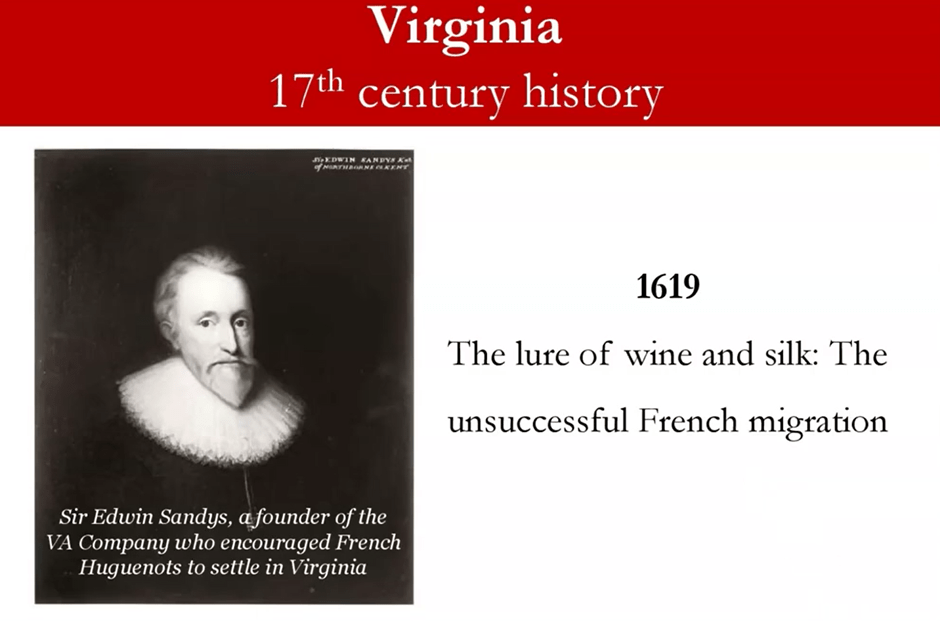
    1619: The Lure of Wine Silk – A group of eight French winemakers and growers arrived in Virginia hoping to establish vineyards and make their mark. However, wine production offered little financial return at the time, while tobacco was thriving. Tempted by profit, they abandoned the vines and turned their focus to tobacco instead.

    This decision went against the wishes of the English Empire, which had forbidden tobacco cultivation in favour of promoting wine and silk. The attempt at vine growing failed, and the French settlers were ultimately blamed for its lack of success.

    1622: The First Exports of Virginian Wine to England and the Tariffs on Imported Wine – The first shipments of Virginian wine to England faced a long and treacherous journey across the Atlantic. Travelling in oak barrels, the wines did not survive the voyage. By the time they arrived, they had spoiled, oxidised and turned to vinegar. The English were deeply disappointed with the quality, and the wines were quickly dismissed.

    Later, tariffs were introduced on wines imported from Europe into the American colonies, shaping how local production evolved and how Virginia’s wine identity began to take form.

    Pioneers Who Refused to Give Up

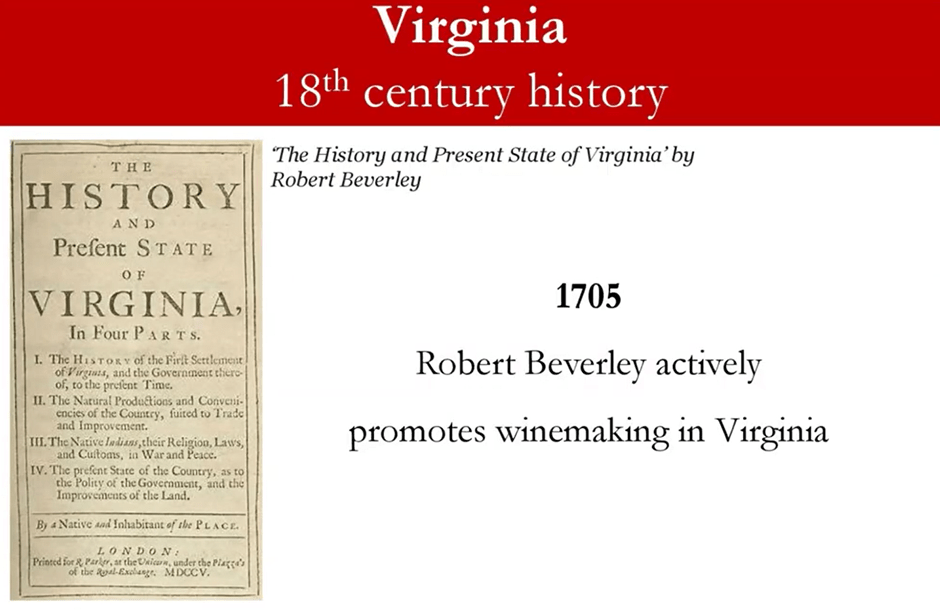
    1705: Robert Beverley was one of the first to actively promote winemaking in Virginia. He also made one of the earliest recorded tasting notes for local wines, describing them as having a “fox grape” character, a slightly musty aroma typical of native grape varieties at the time.

    1709: Robert Beverley planted three acres of vines and built a small cave for storage, along with a press for winemaking. His efforts produced more than 400 gallons of wine, marking one of the earliest recorded examples of organised winemaking in Virginia.

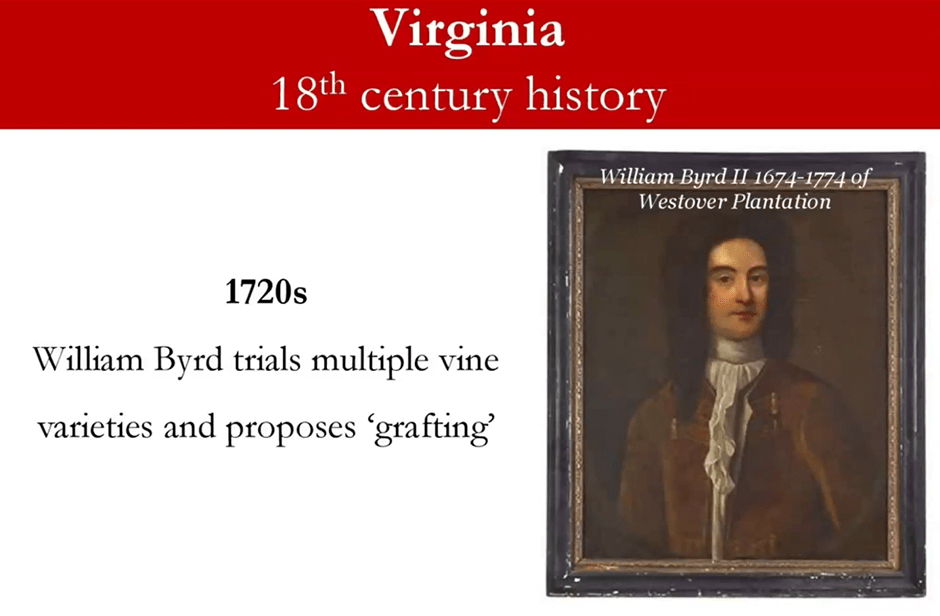
    1720: His brother-in-law, William Byrd, also played a role in Virginia’s early wine story. He experimented with several vine varieties and even proposed the idea of grafting, though this approach was not widely accepted at the time.

    Revolutionary Era: Great Minds, Same Problems

    1759: George Washington invested in Maurice Pound’s winemaking efforts, showing early interest in developing Virginia’s wine potential. His support highlighted how even the most influential figures of the time believed in the promise of local viticulture.

    1769: André Estave began planting vines near Williamsburg, facing the same challenges as those before him. Despite his efforts, issues with climate, soil and disease continued to make successful viticulture difficult in early Virginia.

    1772: The vines continued to fail, much like during William Byrd’s earlier attempts. This left many wondering why success in Virginia’s vineyards seemed so difficult to achieve.

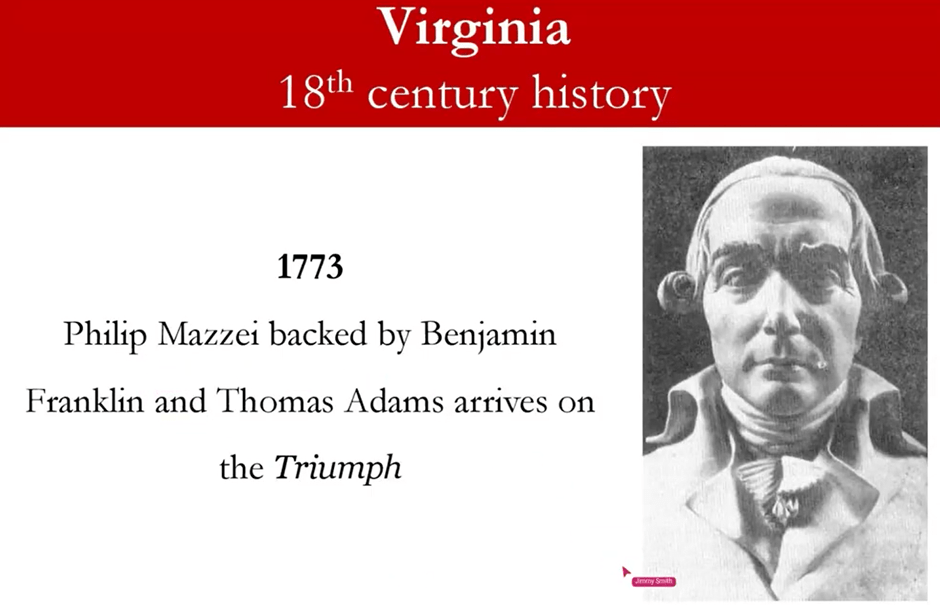
    1773: The Italian viticulturist Philip Mazzei, supported by Benjamin Franklin and Thomas Adams, arrived in Virginia aboard the ship Triumph. He was employed to establish vineyards and produce wine for the colony. However, even under his care, the vines struggled to survive, facing the same challenges of poor adaptation and disease at Thomas Jefferson’s estate.

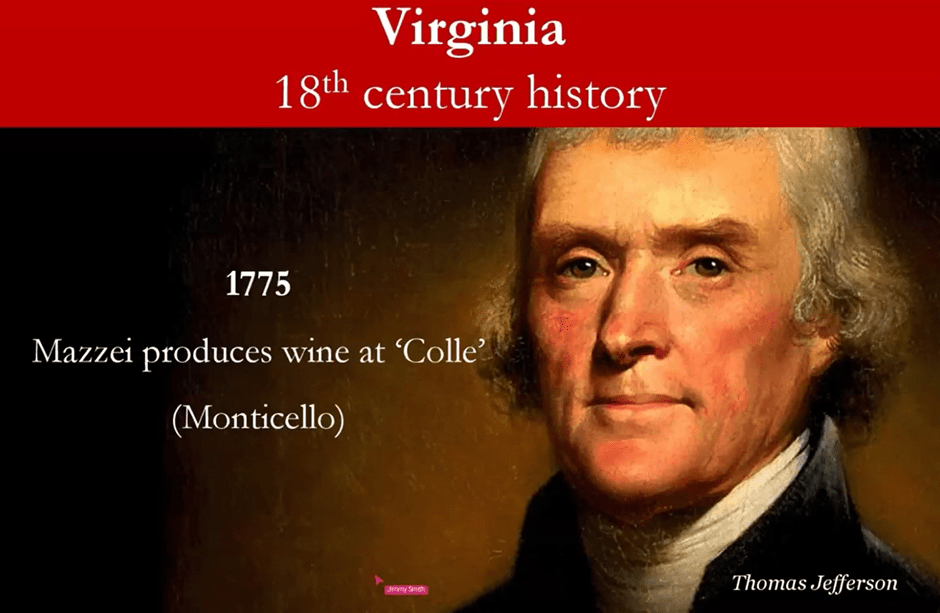
    1775: Mazzei produced his wines in the hilly area known as Colle, near Charlottesville. Today, this same region is known as Monticello, one of Virginia’s most historic and respected wine-growing areas.

    1779: Mazzei eventually returned to Italy, and it was later discovered that the persistent vine failures were caused by phylloxera. This tiny root-dwelling pest would go on to become one of the greatest challenges in global viticulture.

    Breakthroughs and Setbacks

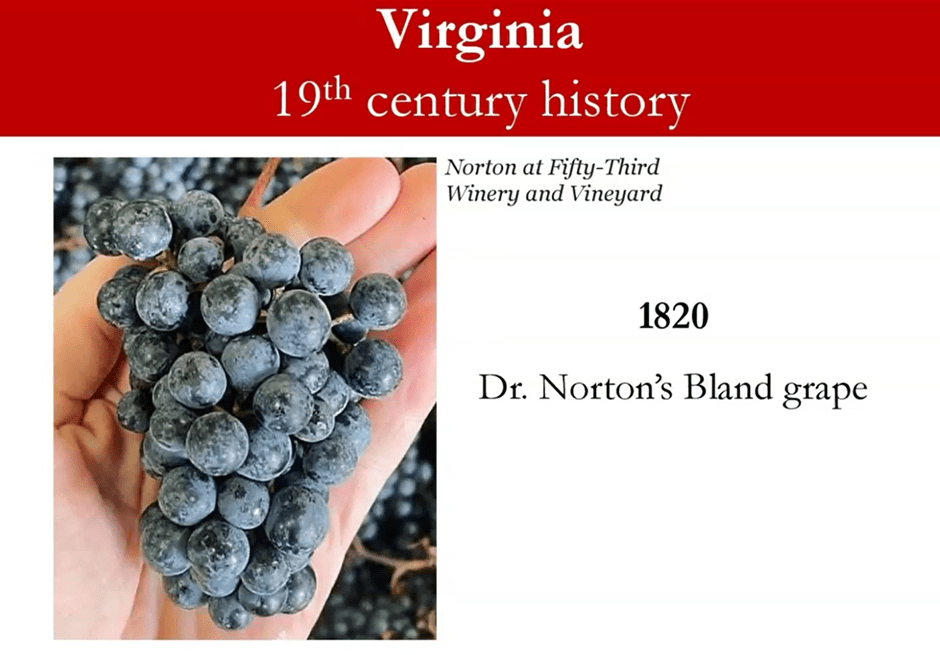
    1820: Dr. Norton’s discovery of the Bland grape marked a turning point for Virginia wine. Originally known as the “Bland” grape, it was later renamed “Norton” and became one of America’s first successful native varieties, well suited to the region’s growing conditions.

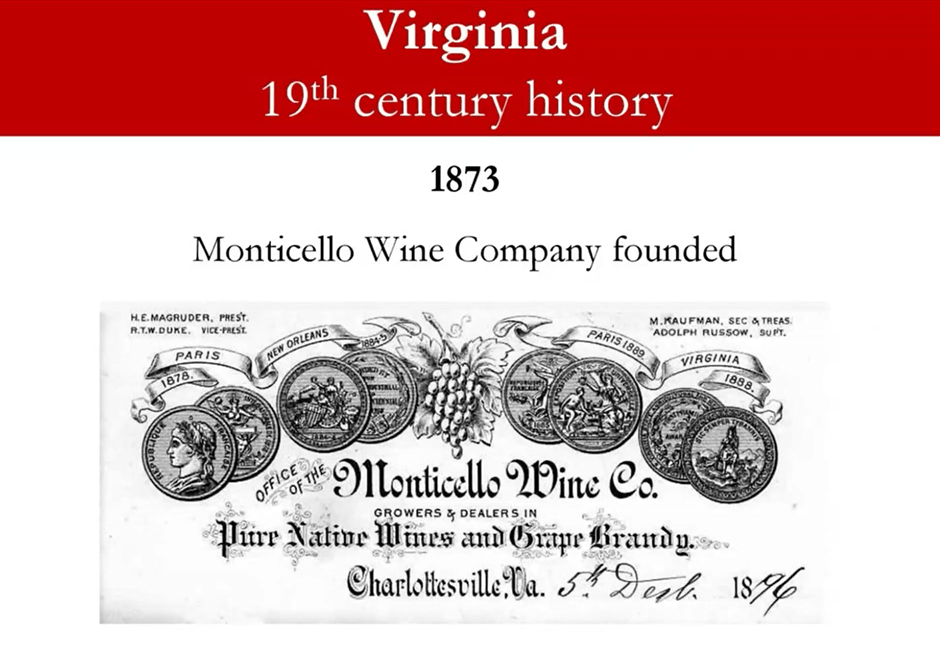
    1873: The Monticello Wine Company was founded and quickly gained international recognition, winning numerous awards in France and Italy. These achievements helped put Virginia on the global wine map and proved that high-quality wines could be produced on American soil.

    1890: Wine production in Virginia dropped significantly due to widespread disease, falling from 460,000 gallons to just 38,000. It was a major setback that highlighted how fragile early viticulture could be in the region.

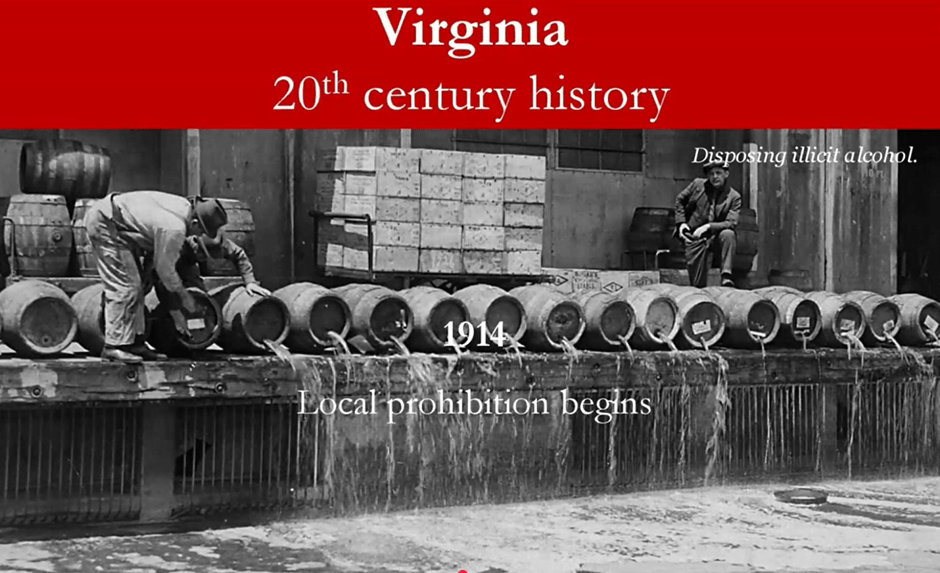
    1914: When local prohibition took effect, Virginia became a dry state. Any wine that had been produced was discarded, marking one of the lowest points in the region’s winemaking history.

    The Modern Virginia Wine Industry Emerges

    1976: Winemaker Gianni Zonin revived Mazzei’s vision for Virginia, using a similar approach to vine growing but with far greater success. With a better understanding of the disease challenges that had once devastated vineyards, he was able to establish healthy vines and produce wines that finally fulfilled Virginia’s early promise.

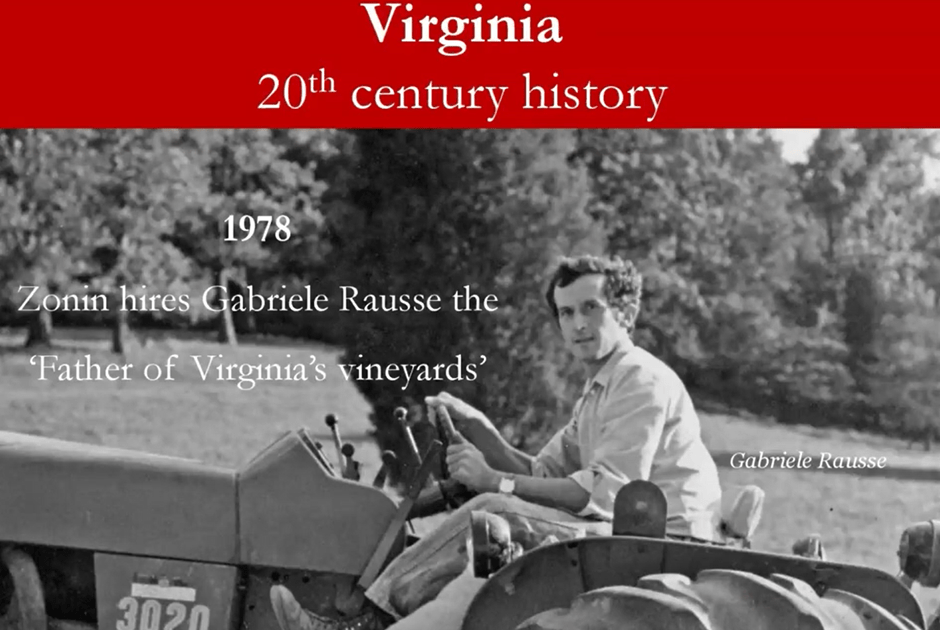
    1978: Zonin hired Gabriele Rausse, who became known as the “Father of Virginia’s Vineyards.” His expertise and dedication played a key role in re-establishing viticulture in the region and setting the foundations for the thriving wine industry Virginia has today.

    1984: In 1984, Virginia established its first official American Viticultural Area (AVA), named Monticello. This recognition marked a major milestone, celebrating the region’s history, distinct terroir and growing reputation for quality wine.

    It all paid off in the end

    From the days of the “Virgin Queen” and Sir Walter Raleigh’s first sighting of the New World, Virginia’s path to producing fine wine has been long and determined. Centuries of failed vines, disease and disappointment eventually gave way to discovery, science and success.

    The real pioneers who shaped this transformation were Philip Mazzei, Dr. Norton and Gianni Zonin. Without their vision and perseverance, Virginia’s wine story might have ended very differently.

    The creation of the first AVA, Monticello, secured Virginia’s place on the wine map. It stands as proof that persistence, innovation and belief in the land can turn centuries of struggle into something truly extraordinary.

    With that foundation laid, it felt fitting to explore the wines that represent Virginia today. From native grapes to European classics, each bottle tells a story shaped by the region’s history, climate and people. In Part 2, I’ll take you through the six wineries and nine wines we tasted, with my personal notes and reflections from this fascinating masterclass.

  • A Spontaneous Trip to Wimbledon That Changed the Course of My Life

    A Spontaneous Trip to Wimbledon That Changed the Course of My Life

    What could a visit to Wimbledon possibly have in common with a career in the Royal Navy? Let me explain.

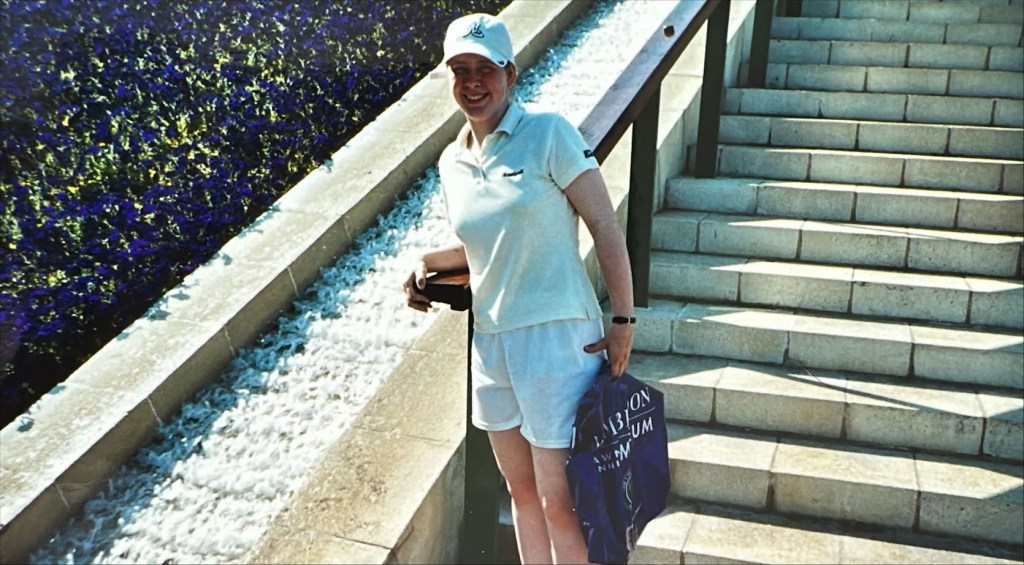
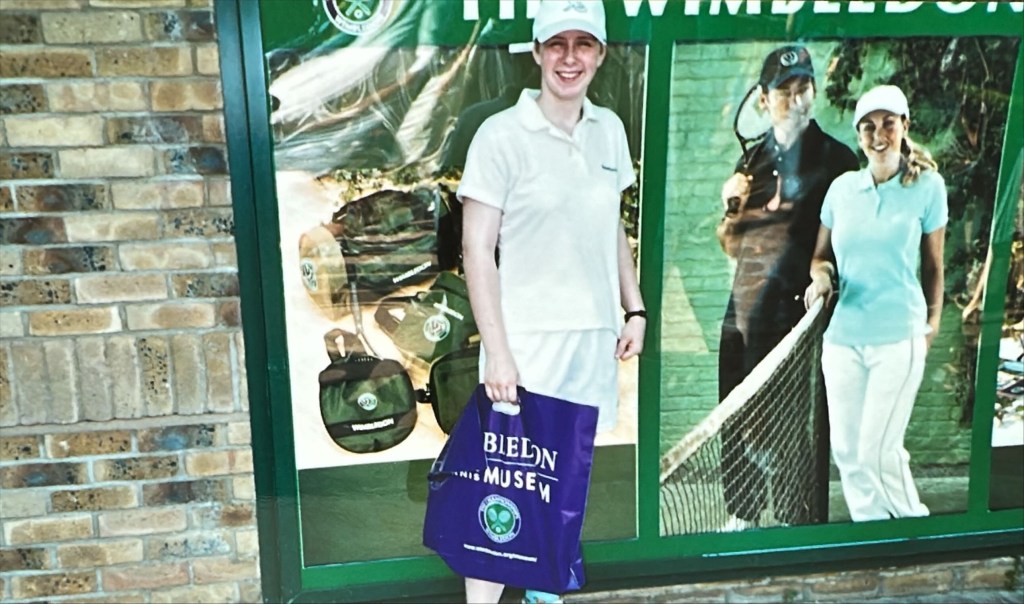
    It all began with a spontaneous decision to join the infamous Wimbledon queue on 25th June 2001. Attending this prestigious tournament had always been a dream of mine. Despite our best efforts in the months leading up to the event, we were unable to secure tickets. So, on a whim, we set off for London one morning, determined to queue for ground passes.

    Back in 2001, queuing for Wimbledon was a rather different experience compared to today. Rather than being directed to a vast field as is now the custom, we found ourselves lining the streets of SW19. Arriving at around 9am, we queued for just two and a half hours, a relatively short wait by today’s standards. To our delight, sponsors of the event regularly passed along the line, offering food and refreshments. Entry cost a mere £20 per person, an absolute bargain.

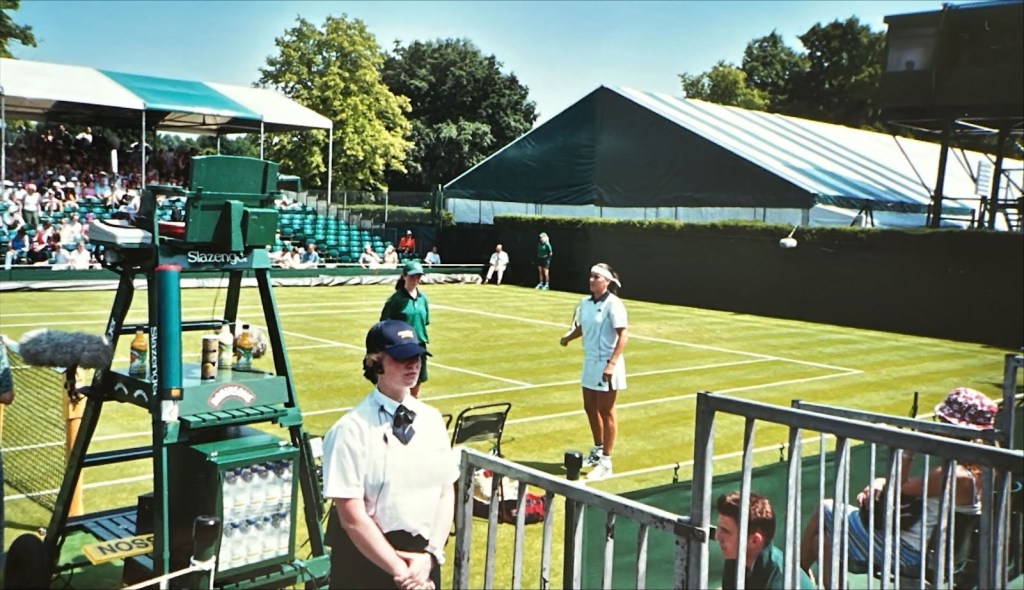
    Walking through the gates of the All-England Club was nothing short of breathtaking. We purchased our programmes and made our way to Court 14, where an impressive line-up of players awaited:

    Order of Play – Court 14
    Justine Henin (BEL) vs Sarah Pitkowski (FRA): 6–1, 6–0
    Goran Ivanišević (CRO) vs Fredrik Jonsson (SWE): 6–4, 6–4, 6–4
    Conchita Martínez (ESP) vs Dája Bedáňová (CZE): 6–2, 3–6, 6–3

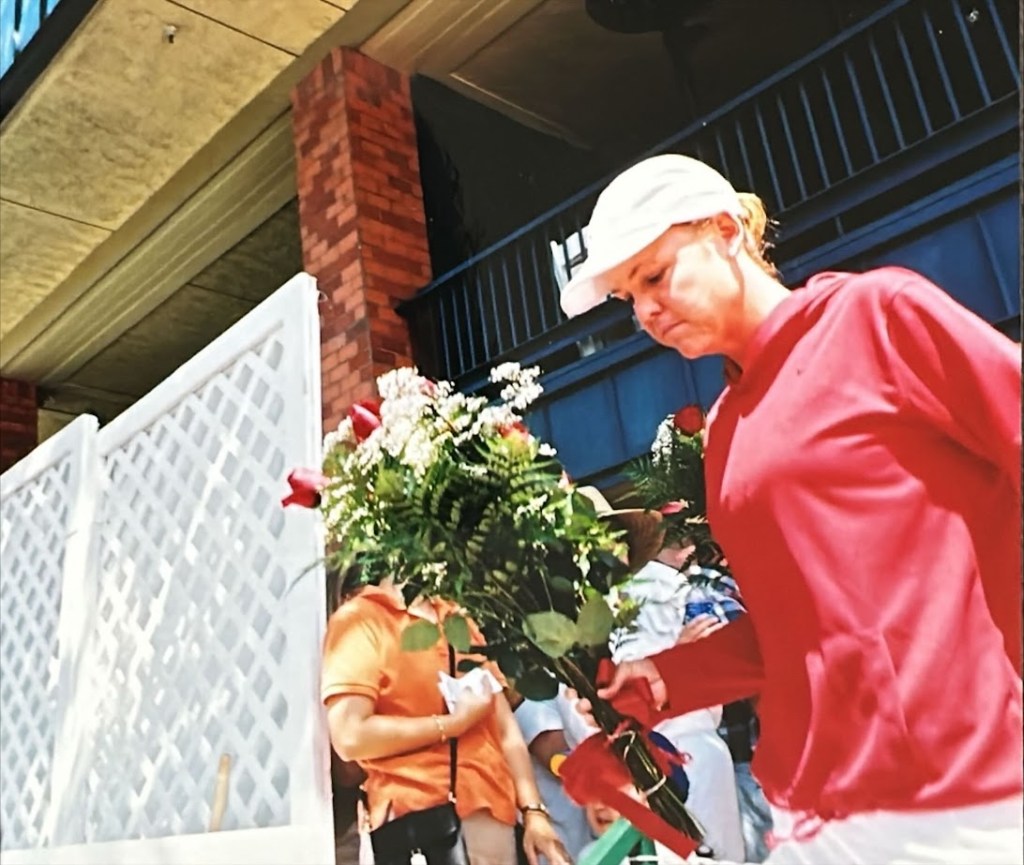
    The atmosphere was electric. Meeting one of my idols, Conchita Martínez, and even getting her autograph, felt like a dream. That day, we were fortunate enough to witness three legends: a former women’s champion (Conchita Martínez), 2001 men’s champion (Goran Ivanišević), and that year’s women’s finalist, Justine Henin. I truly felt as though I was in tennis heaven.

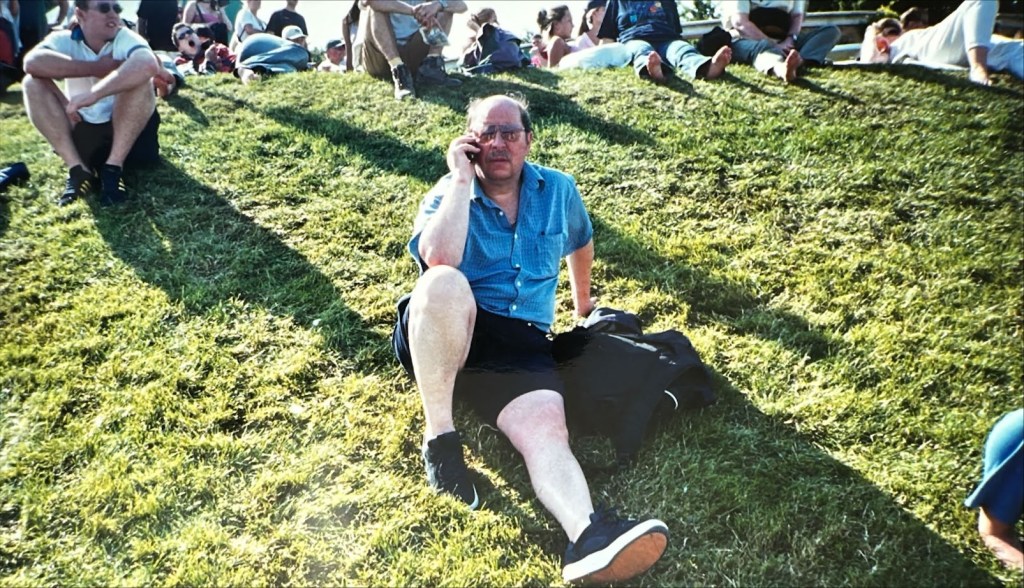
    We explored every corner of Wimbledon, relaxing on what was then affectionately known as ‘Henman Hill,’ enjoying strawberries and cream, and brushing shoulders with some of the sport’s biggest names. They moved so quickly that I barely had time to recognise them, though we did spot Anna Kournikova and Richard Williams, father to Venus and Serena.

    Eventually, our wanderings took us to the Aorangi practice courts (‘Aorangi’ meaning ‘cloud in the sky’). This offered a rare chance to watch elite players warm up. I was thrilled to catch a glimpse of Lindsay Davenport who was my all-time favourite.

    It was here, at the entrance to the practice courts, that I met Paul, a young Royal Navy submariner stationed on security duty. The Metropolitan Police and Armed Forces work together to ensure a safe environment at the tournament, and Paul was among them. Friendly, charismatic, and full of energy, we struck up a conversation. My father mentioned that I was in the process of applying to join the Army.

    That moment changed everything.

    Paul’s eyes lit up. “No,” he said with conviction, “you don’t want to join the Army, you want to join the Royal Navy. We’re the Senior Service!” His enthusiasm was infectious; it was as if he were born to be a recruiter.

    As soon as I returned to Nottingham, I visited the Armed Forces Careers Office and transferred my application from the Royal Signals in the Army to become a Communications and Information Systems Specialist in the Royal Navy.

    That spontaneous encounter led to a 12-year naval career. I travelled to some beautiful places in the world and met some wonderful people.

    Who would have thought that a simple day out at Wimbledon could change the entire course of my life?

    Thank you, Paul, the unforgettable, quirky submariner from the Royal Navy. Though I don’t have a photo of him, the memories of his unforgettable spirit will stay with me always.

  • Reflections from the Embassy: A Day of Slovakian Wine and Insightful Conversations

    Reflections from the Embassy: A Day of Slovakian Wine and Insightful Conversations

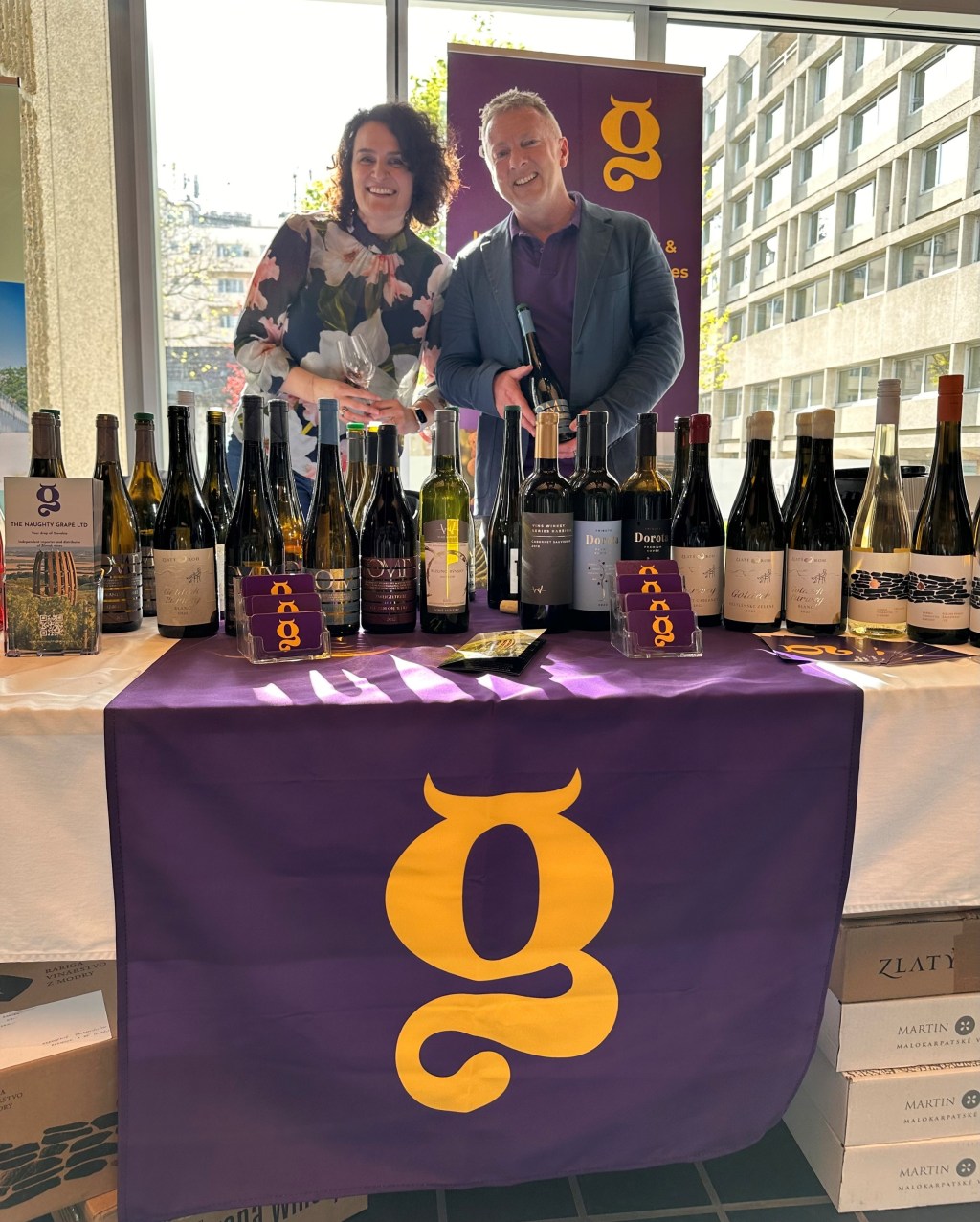
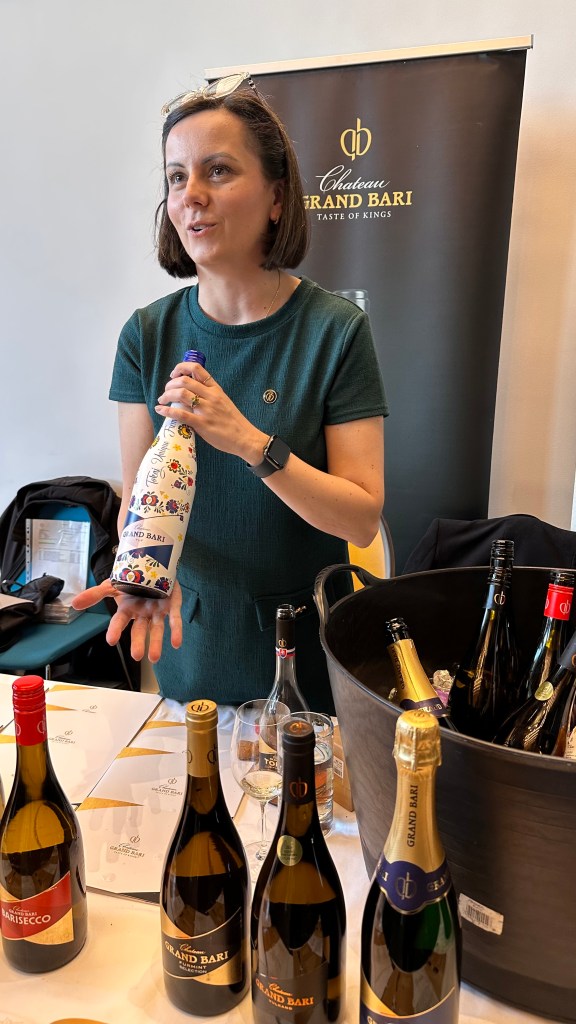
    Attending the Slovakian Embassy Wine Event on April 16th was not only a chance to enjoy an exceptional selection of wines and it was also an opportunity to reconnect with some of the passionate people behind them. After the event, I caught up with Lucia and Darren from The Naughty Grape, Emma Zvolenská from Terra Parna, and Soňa Šabík from Chateau Grand Bari. It’s always fascinating to hear their perspectives, learn how they experienced the event, and gain deeper insights into their work and vision. Their reflections added a personal and enriching layer to an already memorable evening, filled with great wine, meaningful dialogue, and a shared appreciation for Slovakian viticulture.

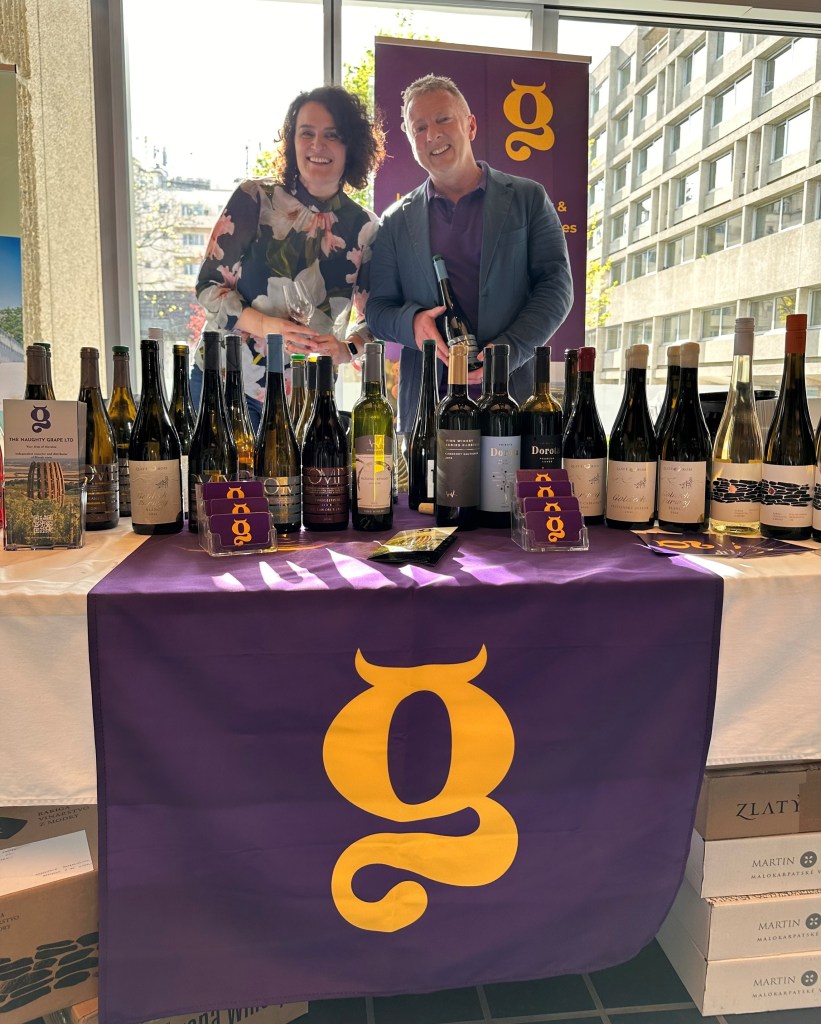
    Lucia and Darren (The Naughty Grape)

    Lucia and Darren, founders of The Naughty Grape Ltd, had a fantastic day with having the honour of representing five amazing Slovak wineries:

    Martin Pomfy @martin_pomfy_vinarstvo_mavin 

    Vins Winery @vins_winery 

     Repa Winery @repa_winery 

     Zlatý Roh @vinarstvo_zlatyroh 

     Rariga @vinarstvo_rariga 

     Víno Magula @vinomagula 

    Most of the producers / wines not yet available on the UK market.  Their stand consisted of 30 wines from fresh frizzantes and elegant whites to bold, characterful reds, so proudly pouring the largest selection at the event. They found the atmosphere was relaxed, with a crowd of over 150 guests was ‘buzzing’. The feedback they received was so positive. Lucia and Darren were so thrilled that so many people were impressed by the exceptional quality and purity of the wines they showcased.  Slovak wine is a hidden gem and one of the world’s best kept secret, the @thenaughtygrapeuk are proud to be leading the way in sharing it with the world. Here’s to new discoveries, exciting beginnings to put Slovakian wines as being truly exceptional.

    PS: special thanks to the Slovak Embassy and the team for organising such successful event!

    Emma Zvolenská (Terra Parna)

    “What an incredible experience to be part of the Slovak wine showcase in London!

    We were proud to stand alongside fellow Slovak wineries and share the best of what our country has to offer with British importers, sommeliers, and wine lovers. The response was amazing — so many guests tasting Slovak wine for the very first time and loving it!

    A huge thank-you to the organisers – @thenaughtygrapeuk and the Slovak Embassy in UK, and to everyone who stopped by our table to taste, chat, and connect. We left feeling inspired and proud — not just of our own wines, but of the passion, talent, and diversity across Slovakia’s wine scene.

    Here’s to new friendships, future collaborations, and more opportunities to bring Slovak wine to the world”.

    Soňa Šabík (Chateau Grand Bari)

    “The event at the embassy was great — for me, it was time spent with very interesting people. I liked that we were able to talk about wine in depth. 

    The guests especially enjoyed our dry wines and found them interesting. Many were surprised by the potential of Tokaj. 

    They also appreciated the cans as a good idea — it’s a drink that’s very suitable for the summer season”.

    As the event came to a close, it was clear that events like these do more than showcase wine, they spark connections, inspire conversations, and deepen our understanding of the craft behind every bottle. Hearing directly from the people shaping Slovakian wine today was both enlightening and energising. And this is just the beginning.

    Stay tuned for more stories, interviews, and behind-the-scenes glimpses into the world of Slovakian winemaking. There’s so much more to discover.

  • Stepping into the World of Wine: My First Experience as a Brand Ambassador

    Stepping into the World of Wine: My First Experience as a Brand Ambassador

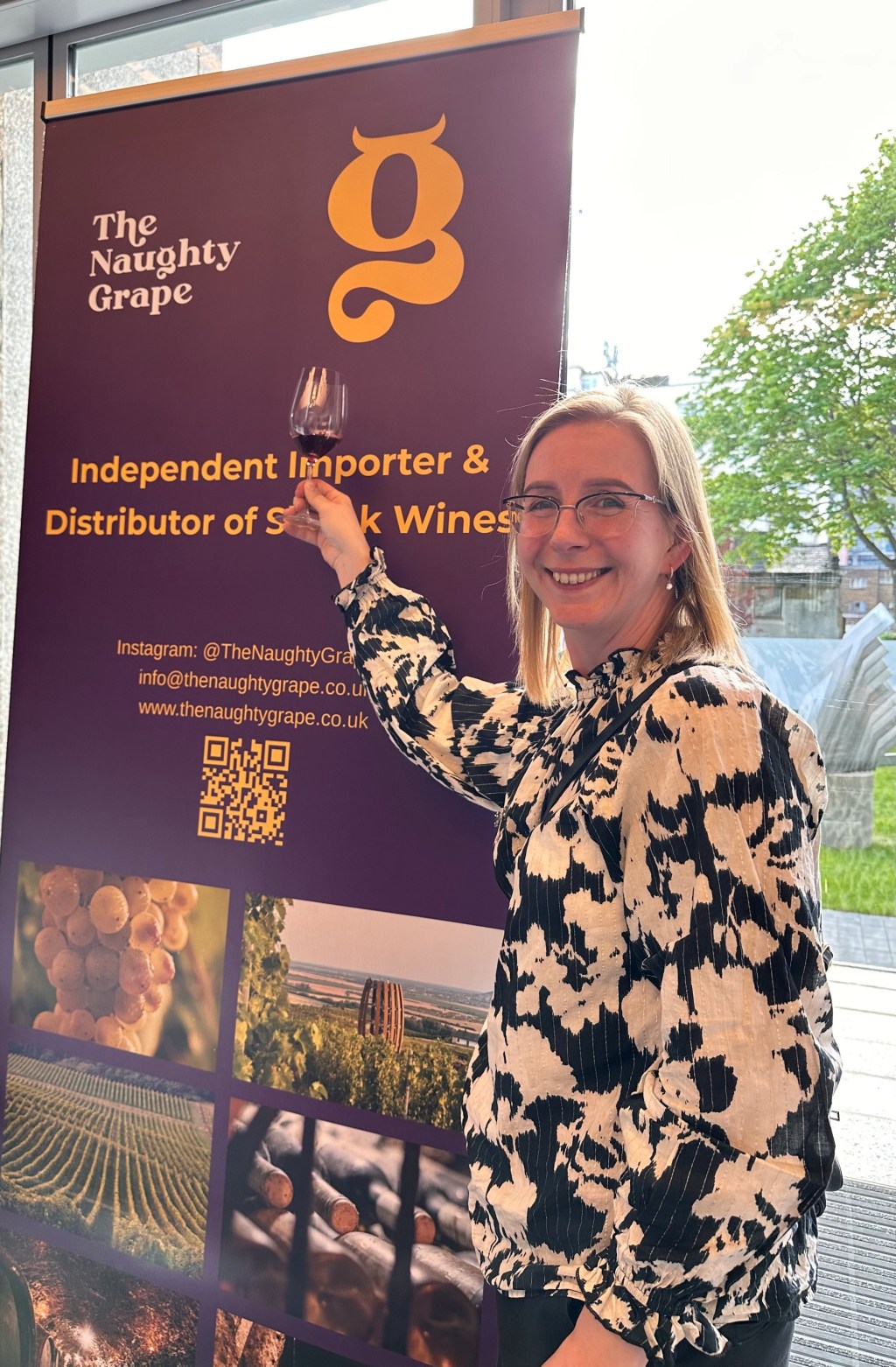
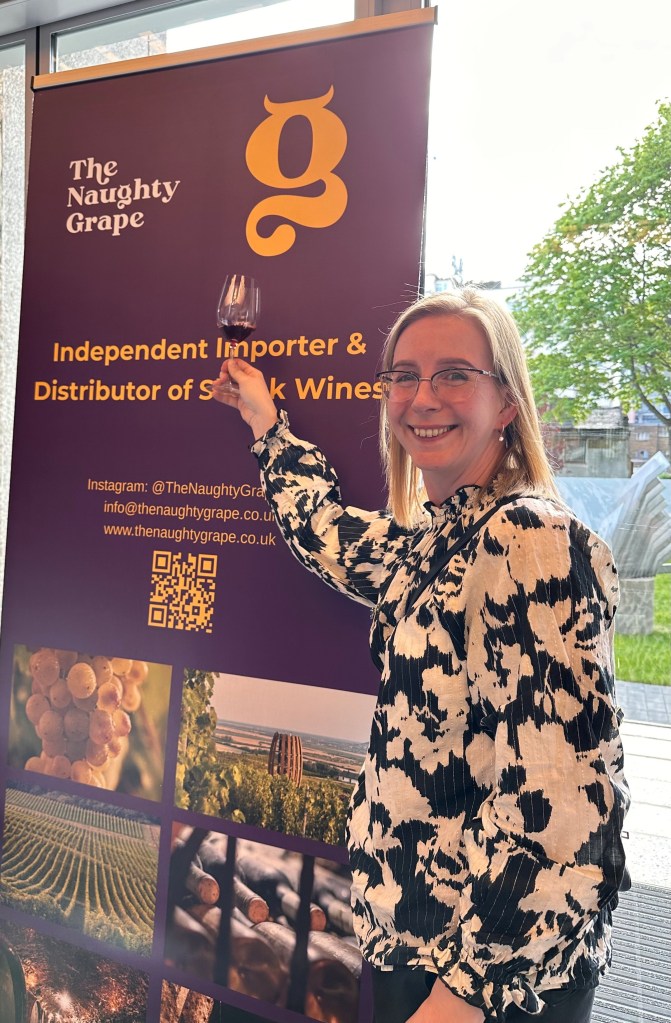
    Starting something new is always daunting. Stepping out of your comfort zone, striving to do your best, and navigating through unfamiliar territory can be overwhelming, but it’s also exhilarating. I feel incredibly fortunate that Lucia and Darren from The Naughty Grape have given me such a fantastic opportunity to represent their brand as an ambassador.

    Though I’m still new to the wine world and finding my feet, this experience is helping me grow into something beautiful. For the first time, I truly feel like I belong and like I’ve found my place in the wine industry.

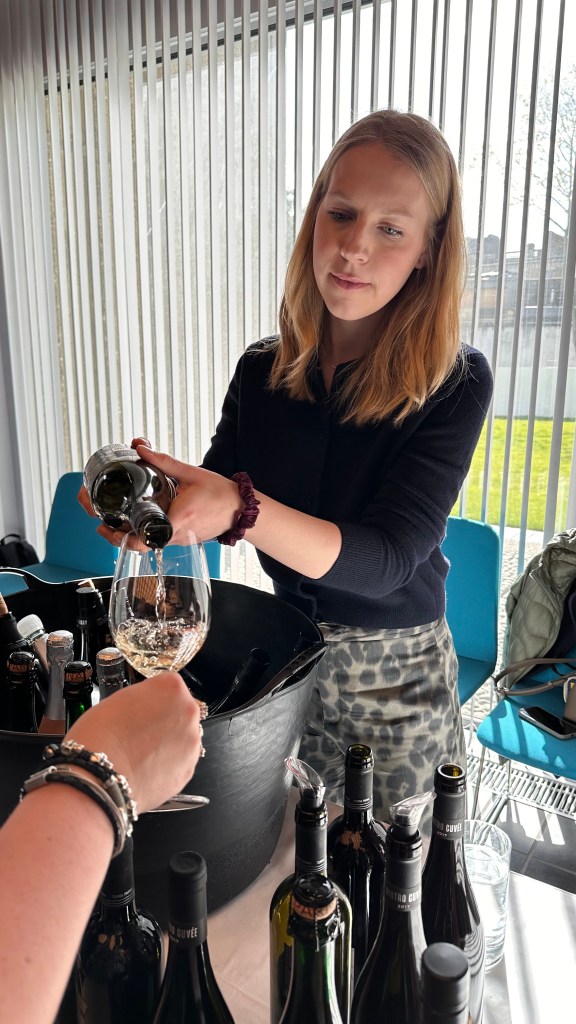
    My first outing as a brand ambassador took place at none other than the Slovakian Embassy in London. What a fitting and prestigious place to begin this adventure. The event featured 12 tables, each represented by wineries and importers. I was a mix of nerves and excitement, as I always put pressure on myself to succeed. But I reminded myself: this is a journey, and I’m here to learn.

    Lucia and Darren welcomed me warmly, immediately putting me at ease. I had so many ideas I was eager to bring to life, so I got straight to work capturing media and content from the event.

    Before this, I had already been creating content for some of the wineries present, including Terra Parna and Grand Bari. Meeting their teams in person and hearing how much they appreciated my work was deeply rewarding. It was a real confidence boost that told me I was on the right path.

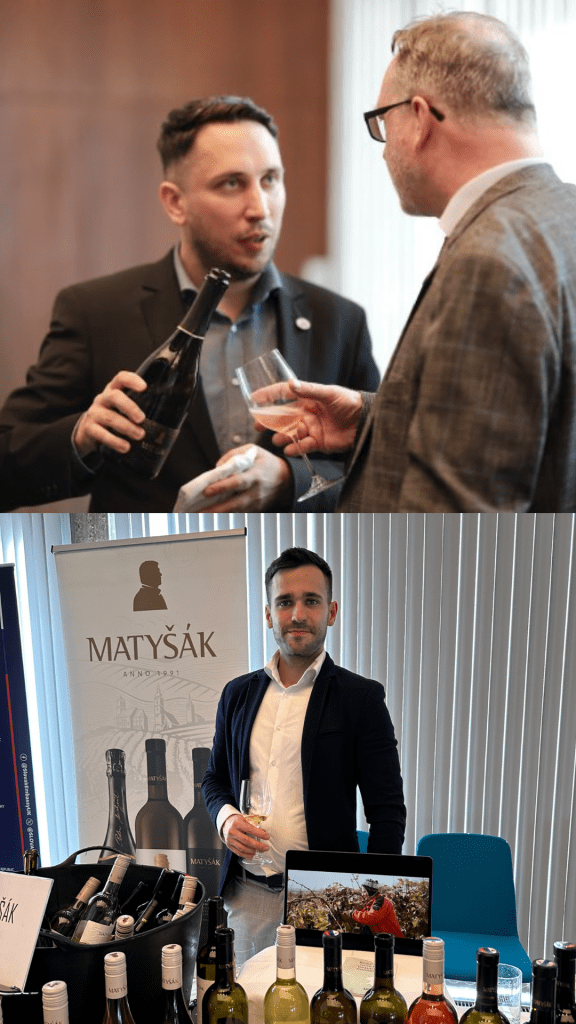
    I also connected with several of The Naughty Grape’s represented wineries, including Erik Dorusinec and Dom Baranek from Vino Matyšák. With their impressive backgrounds as sommeliers in prestigious venues and their deep knowledge of Slovak wines, we had inspiring conversations that captured the essence of their brand.

    One of the most comforting parts of the day was having my good friend Haydy by my side. We make a strong team at these events, sharing similar ideas and passion for wine. Her support and wine wisdom always give me that extra confidence.

    This event was a major learning experience. I was inspired watching everyone speak so passionately about their wines, and I feel privileged to have captured that passion in the media I created. It was also a very well-organised event, and I was made to feel relaxed and welcomed throughout.

    Now I’m stocked with new wines to try, share, and talk about, I’m more excited than ever for what lies ahead. This is just the beginning, and I can’t wait to continue this journey in the wine world.

  • Online: Jimmy’s Aged Cellar: Aged Australian Chardonnay Part 3

    Online: Jimmy’s Aged Cellar: Aged Australian Chardonnay Part 3

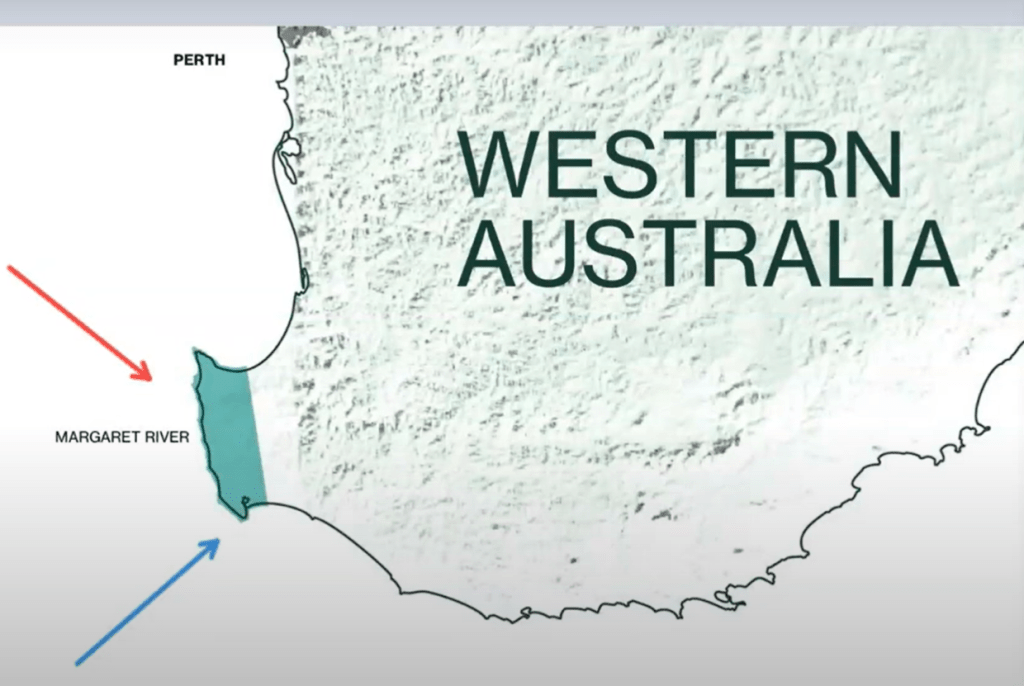
    Margaret River is a 3-hour (approx. 270KM) drive from Perth and is a peninsula surrounded by two oceans, the Indian Ocean and the Southern Ocean. This is different to the maritime factors compared to Mornington Peninsula as the Indian Ocean brings warm sea breezes whereas the Southern Ocean brings a cooling influence. There is a balanced heat temperature throughout the year where it is never too cold or too hot. This means that the diurnal ranges are very low.

    Vines were first planted here in 1967 as the Western Australian Government wanted more people to increase viticulture in the state. Agronomist, Dr John Gladstones was tasked to identify the best sites for viticulture. This was due to Margaret River having a similar climate to Bordeaux and had the oldest vineyard soils of the world. The soils are of deep, well-drained red gravelly loams (very similar to Left Bank Bordeaux).

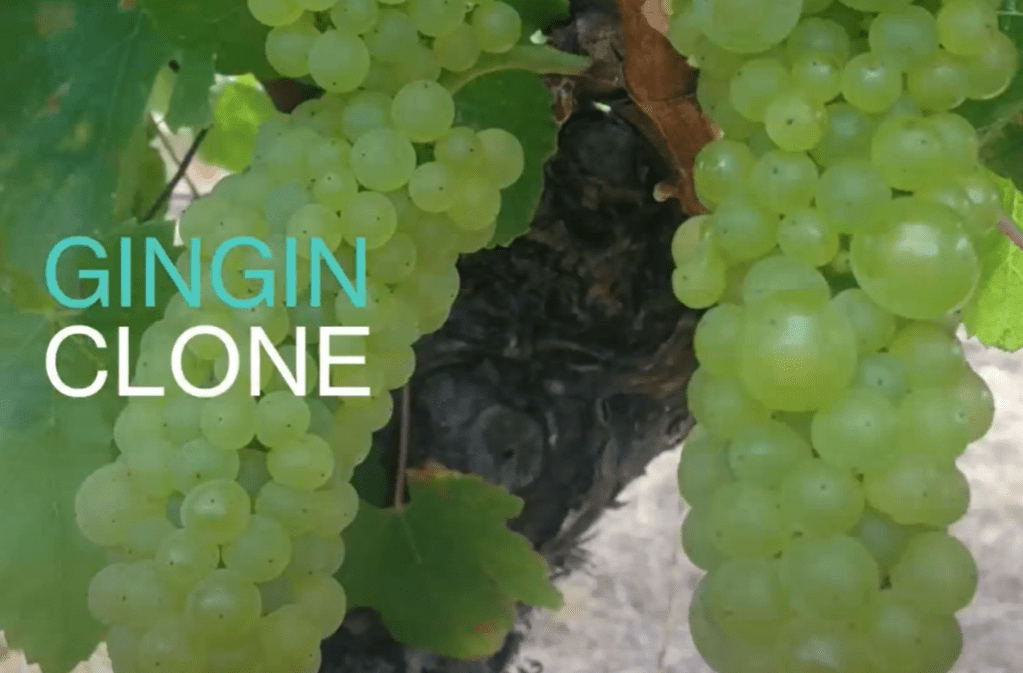
    GinGin Clone

    The 1st clone was planted in 1975 and is now the most planted clone in Margaret River. It is known for its tendency to produce loose grape bunches with berries of different sizes. It is known as the Hen and the Chicken. The pepper corn sized berries (Chicken) have high acid levels, high skin to juice ratio resulting in more phenolics. The larger berries (Hen) have lots more juice and concentration giving more depth in fruit flavour and high acidity. This is a great combination as it resembles a pasta al dente texture behind the palette.

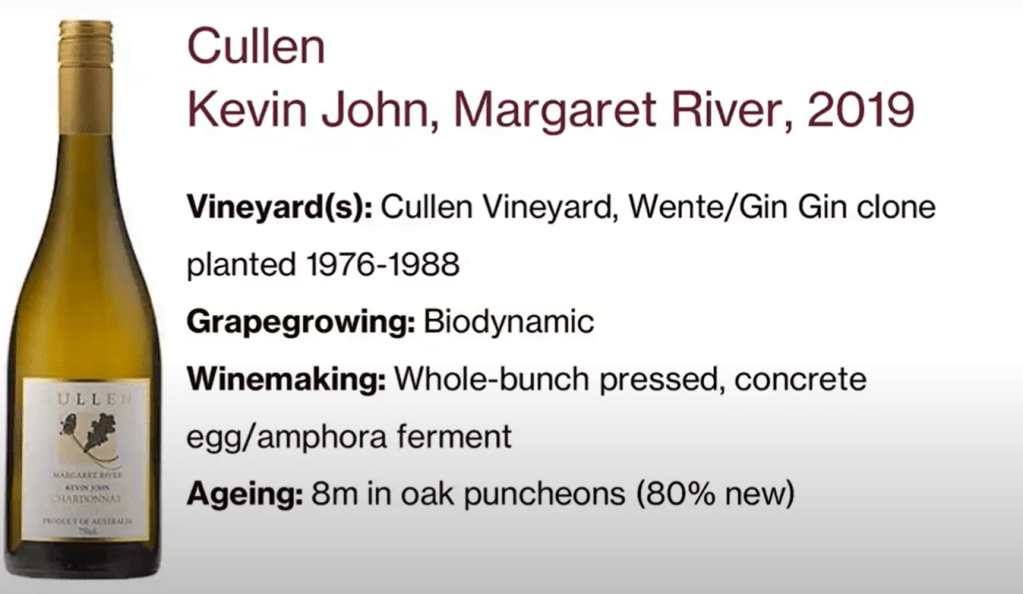
    Wine No.9 – Cullen, Kevin John, Margaret River 2019

    Cullen wines were founded in 1971 by Dr Kevin John Cullen and Diana Madeline Cullen. This winery has always been ahead of the curve when it comes to innovation trends. The vineyard was made organic in 1995 and biodynamic in 2004.

    This wine still has a lot of potential for ageing. There is definitely an Al Dente texture coming from the GinGin clone with a touch of phenolic. The fruit characteristics are very vibrant and intense. Overall, this is an outstanding wine and a good representation on how different a chardonnay can be in this region.

    Summary

    What a remarkable journey Jimmy and Emma had taken us on going through the history and changes of Chardonnay. This is expanded my knowledge on how different regions and vintages can really determine the characteristics of this fascinating grape variety. After doing this online session, my love for Chardonnay has increased and I have a better understanding and respect on how different it can be. I would highly recommend attending Jimmy’s Online courses at the West London Wine school. Jimmy has so much enthusiasm and passion for the world of wine and definitely shares his love for the love of wine.

  • Online: Jimmy’s Aged Cellar: Aged Australian Chardonnay Part 2

    Online: Jimmy’s Aged Cellar: Aged Australian Chardonnay Part 2

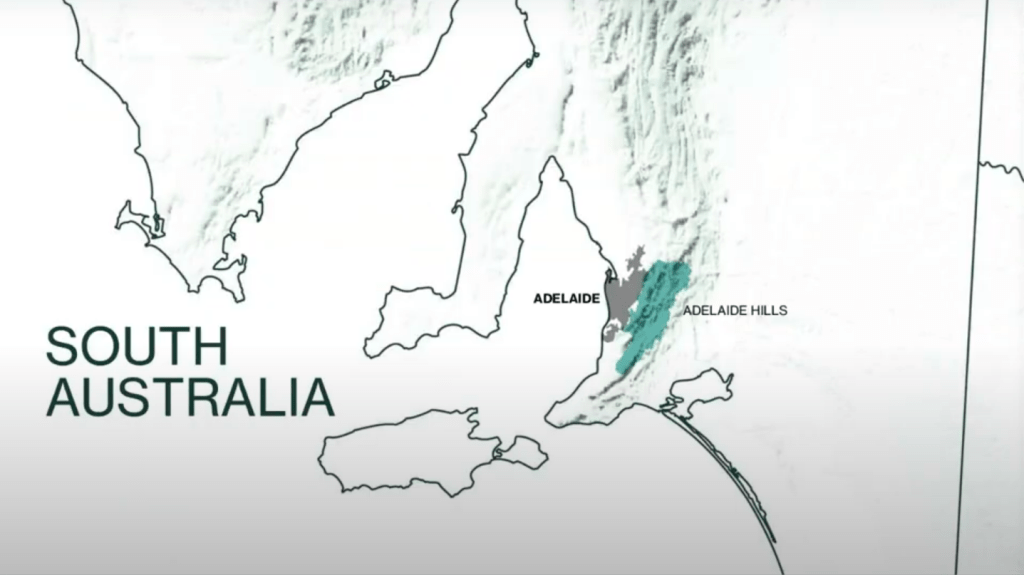
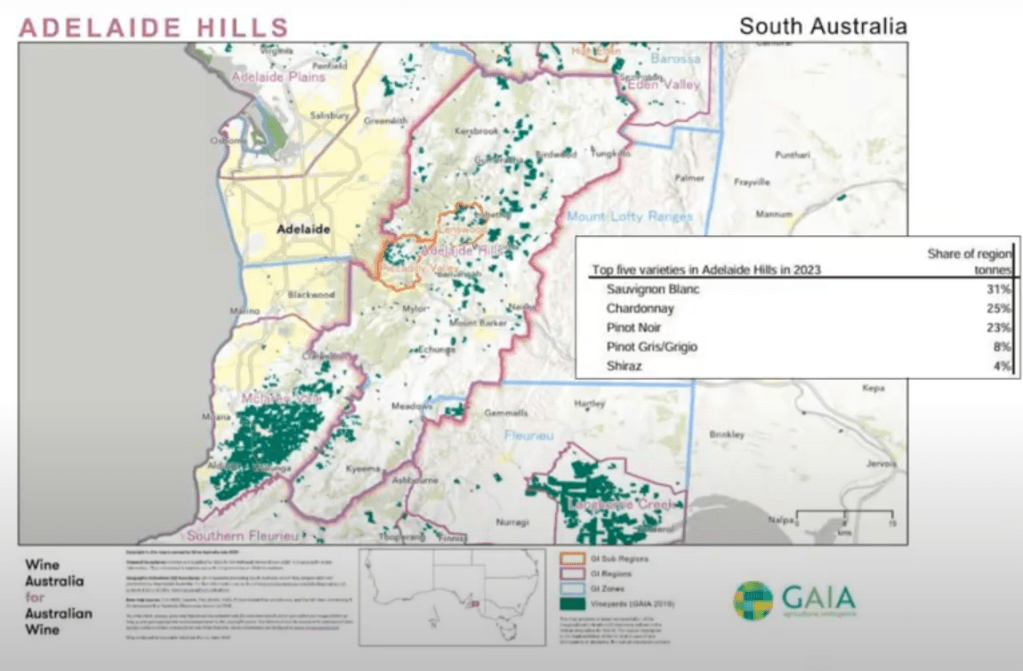
    Now lets venture north towards Adelaide Hills which is also a cool climate althought it has more sunshine hours. This area still has the ocean factors of cooling sea breezes but not as much as Mornington Penninsula. What makes Adelaide Hills such a special place to grow Chardonnay is due to its evlavation. The central part can reach between 650-700m in altitude. This means cooler conditions and a large diurnal range where it can reach temperatures of 30 degress in the day and fall to 12 degrees at night. So it is key to select the correct vineyard inorder to either get an fresher/ light chardonnay or a fuller/ fattier chardonnay.

    • Low altitude, west facing slopes             –         Fuller/ Fattier Chardonnays
    • High altitude, higher diurnal ranges        –         Fresher/ Light Chardonnays

    Adelaide Hills has two official sub regions that are at the highest altitude, Lenswood and Piccadilly Valley. Both areas reach up to 600m in altitude although Piccadilly Valley has lighter rainfall than Lenswood. Jimmy and Emma continued taking us on a journey through our different chardonnays focusing on these two regions.

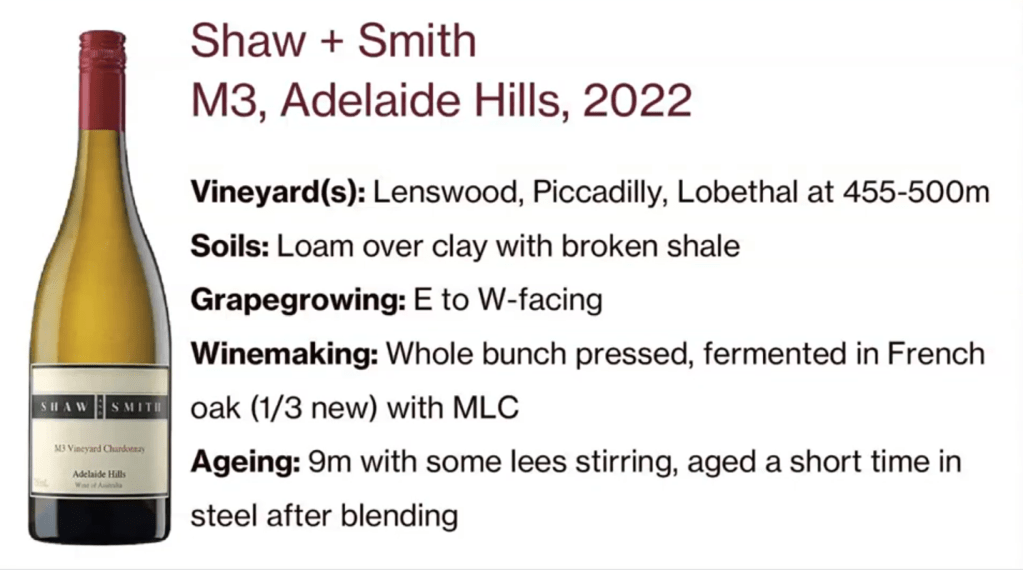
    Wine No.6 – Shaw + Smith, M3 Chardonnay, Adelaide Hills (Lenswood) 2022

    Shaw + Smith was established in 1989 by cousins Micheal Hill-Smith and Martin Shaw. ‘M3’ in the name of the wine includes Matthew who no longer works with the company. Their approach is to manage vineyard sustainably, valuing vine and soil health and low yields. This winery has gone through the change of different styles of chardonnays. 20 years ago, the vineyards were much lower down the hills so the wines were much richer and bolder. Then they moved up the hill 10 years later to achieve the delicate chardonnays we have today. The quality of these wines is exceptional especially at their price point. Jimmy uses this wine for his WSET3 and Diploma course. (I know as I have tried them).

    Jimmy wanted to showcase a much younger wine that has potential for ageing. It was interesting to taste how much potential this wine has. Emma agreed that this wine was a similar style to the Kooyong, Farrago 2012 with a leaner, floral and mineral balance.

    Wine No. 7 – Petaluma, Chardonnay, Adelaide Hills (Piccadilly Valley) 2017

    Petaluma was founded in 1976 which is built on their strong believes to carefully select the finest viticultural sites and the right grape varieties that suit the area. This vineyard is located in Piccadilly Valley which is nestled behind Mount Lofty which gives this wine in particular delicate/ light flavours with high acidity. This style of chardonnay is less new oak with a fresher and riper style.

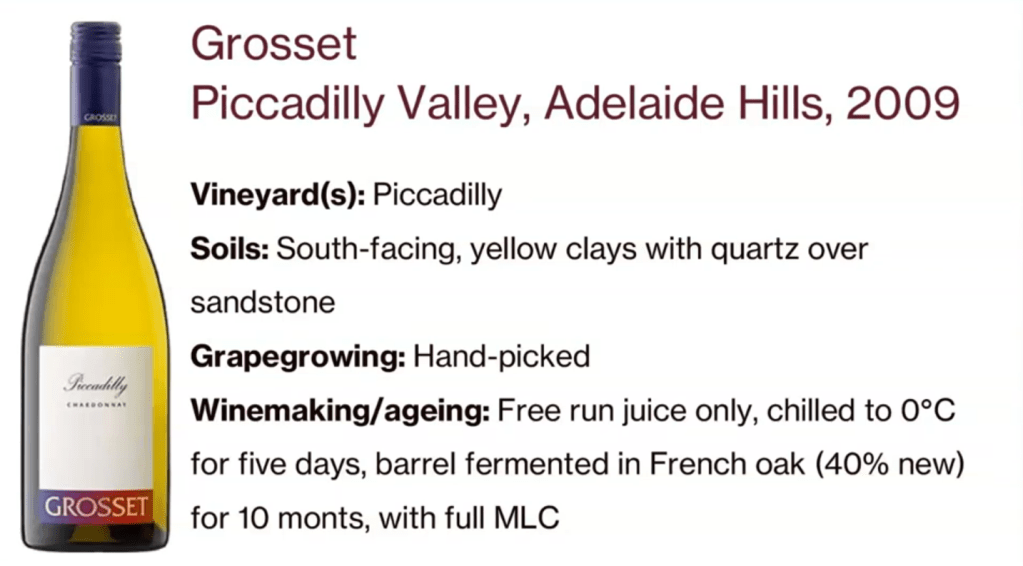
    Wine No.8 – Grosset, Piccadilly, Adelaide Hills 2009  

    Grosset started in the 1980s mainly based in the Clare Valley. Renowned winemaker Jeffery Grosset embarked on a journey to craft exceptional wines and is famous for his Rieslings. This wine is from a very small vineyard in Piccadilly, Adelaide Hills which as only produced 300 cases (6 bottles per case). This vintage of 2009 had a wet winter but a brutal summer with a very bad heat wave. This makes the wine more powerful and dense with smoky oak notes not from the oak but from ageing. Also, there are tertiary notes of mushroom and fungal notes.
    The journey has come along on with this online session so impressive! To experience different vintages as well as different areas is really special. It’s so interesting to see the transformation how much chardonnays have changed from the fuller bodied to the lighter more delicate bodied wines in the Adelaide Hills.

  • Online: Jimmy’s Cellar: Aged Australian Chardonnay

    Online: Jimmy’s Cellar: Aged Australian Chardonnay

    Chardonnay has always been a very mis understood grape variety for various reasons with the misconceptions of the ABC ‘anything but chardonnay’ ideology. So, Jimmy Smith organised an online tasting session on Aged Australian Chardonnays personally selected from his cellar, with vintages spanning from 2008 to 2020. Jimmy was joined by the iconic Emma Symington MW to showcase the journey and wines of Aged Australian Chardonnay consisting of 9 wines from 7 different wineries across three regions.  I will be splitting this online session into three blogs focusing on Mornington Peninsula, Adelaide Hills and Margaret River. With Jimmy’s extensive knowledge in wine and Emma’s specialisation in wine Australia we were taken through the history of chardonnay which spanned over 3 decades.
    The History of Chardonnay in Australia

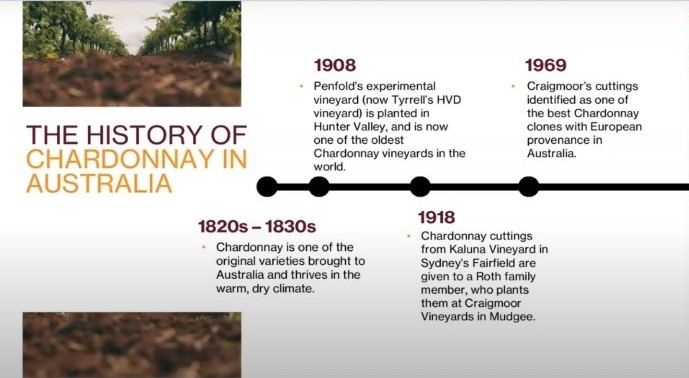
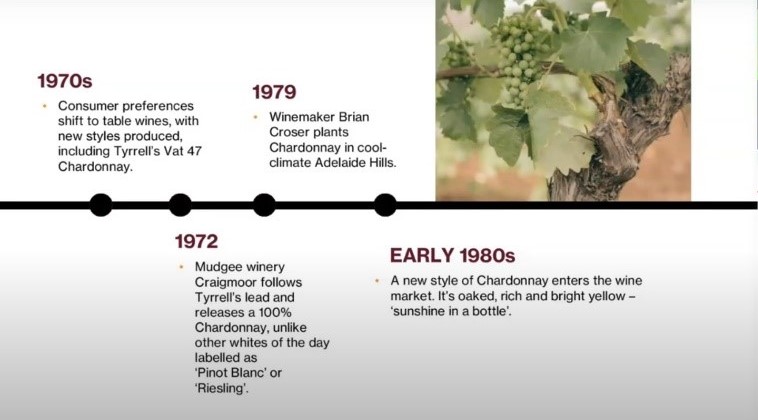
     Australian viticulture was changed in the 1830s by the Scottish immigrant James Busby. He brought cuttings of the grape variety Chardonnay from France where it thrived with the warmer conditions. Through the 20th century Chardonnay was not seen on a wine label as it was typically blended or mislabelled as Riesling or Pinot Blanc as there were no strict labelling laws like there are today.
    In 1908, Penfold’s winery (now Tyrrell’s HVD vineyard) planted an experimental vineyard in Hunter Valley. It is now one of the oldest Chardonnay vineyards in the world, phylloxera free and still a working vineyard.

    From the 1970s, people were more aware of these grape varieties and chardonnay appeared on the 1st wine label in 1972 called ‘Vat 47 Chardonnay’. This wine put  Australian on the map of winemaking as it made people sit up and take notice.

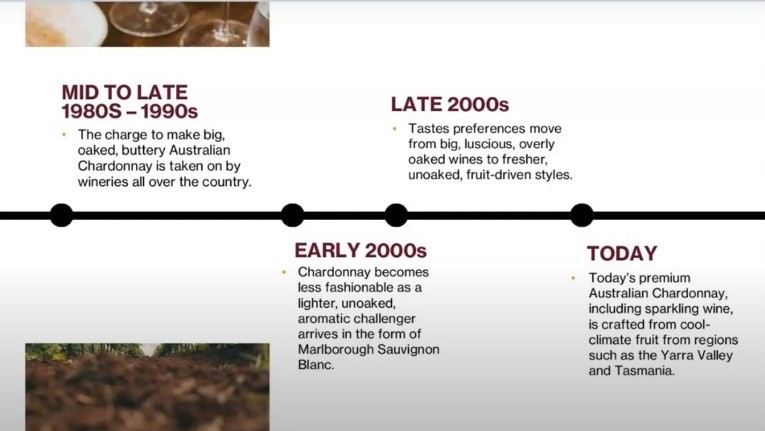
    In the 1980’s a new style of chardonnay entered the wine market as an oaked, rich and bright yellow wine. Most of these wines were referred as ‘sunshine in a bottle’ with a cute animal on the label and butter wines which would fly off the shelves.

    Unfortunately, the need for heavy oaked, buttery wines had faded when the new kid on the block grape variety had arrived from Marlborough, New Zealand: ‘Sauvignon Blanc.’ The market had shifted towards a lighter, unoaked aromatic wine putting chardonnay out of fashion. This was when the misconceptions of chardonnay has started to creep in and with the help of the media highlighting the ABC ‘anything but chardonnay’ ideology.

    Things needed to change so the winemakers moved away from the heavy oaked buttery wines towards an unoaked fruity, elegant style chardonnay. This put chardonnay back in the running as some of the most desirable wines in the market.

    Mornington Peninsula

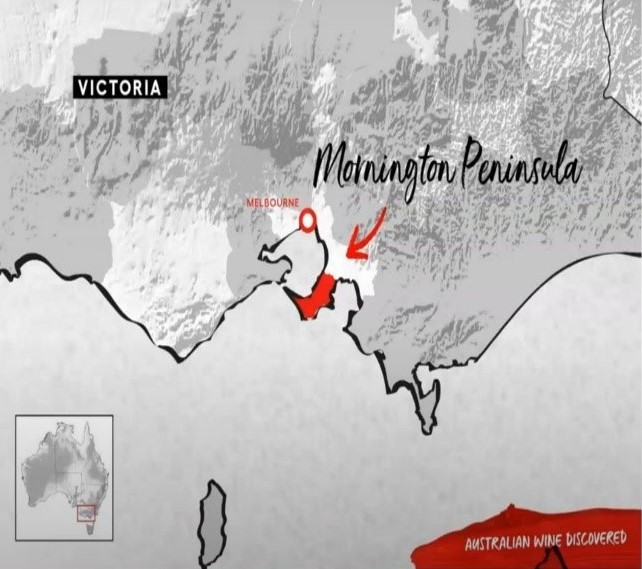
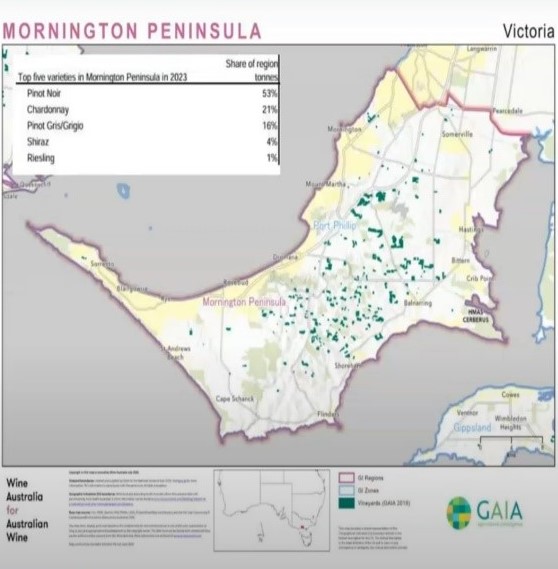
    The peninsula has a lot of climatic influences of maritime, altitude and surrounded by Port Philip to the west, Western port to the east and Bass Strait to the south. The cool maritime climate provides ideal growing conditions with a low risk of spring frosts, a great air circulation from sea influences reducing the risk of fungal diseases. Mornington has approx. 900ha of vines spanning over around 200 vineyards, which are no more than 7KM away from the Ocean. This young wine region was started in 1973 when the first vines were planted. With this close communities of vineyards and wine makers, there are currently no big brands here making it small and mighty with plantings of mainly pinot noir and chardonnay.

    The terroir of the peninsula consists of two categories, ‘Up the Hill’ (Red Hill) and ‘Down the Hill.’ Up the Hill is the red area on the map around Red Hill with influences from altitude of 250m and a composition of red basalt soils with good water retention which provides high vigour. Harvesting tends to be 2 weeks later than ‘Down the Hill’ making the chardonnays more delicate, high acidity with a saline style. ‘Down the Hill’ has a lower altitude with poorer lower in fertility soil (sedimentary brown/ grey loan) which is free draining. The sites are much warmer making chardonnay richer, fatty styles.

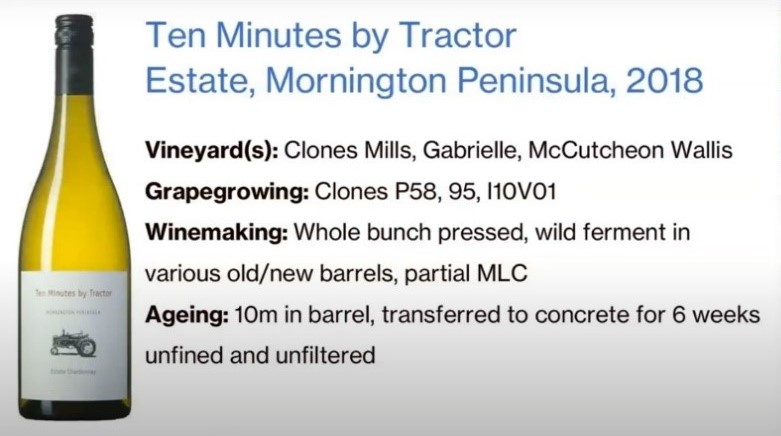
    Wine No.1 – Ten Minutes by Tractor Estate, Morning Peninsula, 2018 (Up the Hill)

    Ten Minutes by Tractor started its wine journey when three families; Judd, Wallis and McCutcheon, formed a co-operative to reduce costs and increase efficiency in 1997. Initially it was to share machinery, vineyard equipment and to employ a vineyard manager. The name: ‘Ten Minutes by Tractor’ was decided over a drink by the three families as they were literally ten minutes by tractor from each of their vineyards, and the name stuck.

    This wine was not initially on Jimmy’s list for tonight’s masterclass, but he wanted to present a ‘stella’ wine for this region. This vintage of 2018 was a very wet winter and cool spring. This meant that the bud burst as late. It did lead into a warm good quality growing season with an early harvest with the shortest ever time between bud burst and harvest. This wine has a high acidity, delicate and light style with a briskness on the palette. A very interesting fact about this wine that is has 62% MLF and still displays high acidity. This wine would really blossom with age for another 5-10 years keeping it complexity and intensity fruit characteristics.

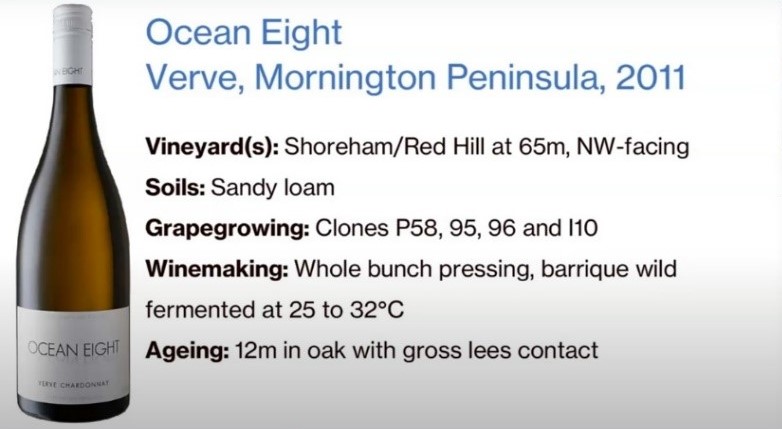
    Wine No.2 – Ocean Eight Verve, Mornington Peninsula, 2011 (Middle of the Hill 65m)

    Ocean Eight is managed by Micheal & Hollie Aylward using their knowledge of visiting vineyards and cellars of Burgundy, France to develop their style of wine. Micheal always returns to two ideas he has worked with since the 1st vintage:

    1. How well the wines will match with food?

     2. Will the wines best represent the climate and growing conditions of Mornington Peninsula?

    This wine represents a leaner style than the typical chardonnays previously produced. Shoreham vineyard has 65m altitude at the middle of the hill giving a tight acidity. The 2011 vintage was a very wet/cool year with a cool summer. Mostly this vintage in Victoria was a write off and Ocean Eight set the way for producing such a lighter, mineral Chablis style chardonnay. Although this wine has a lightness about it, there is a nutty/ honey notes in the background.

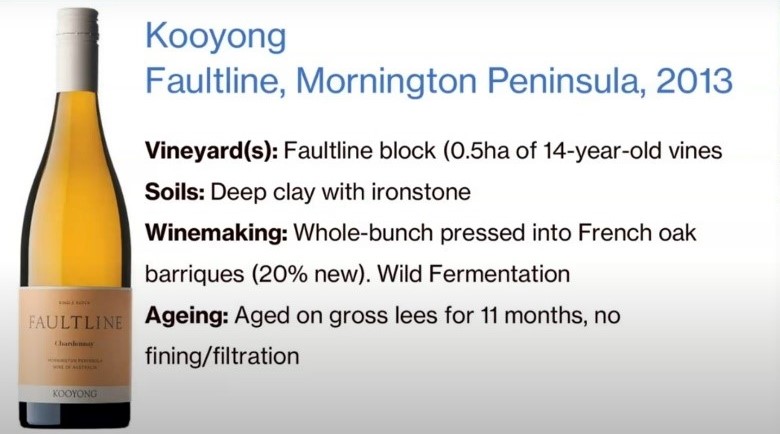
    Wine No.3 – Kooyong Faultline, Mornington Peninsula, 2013 (Down the Hill)

    This wine was the catalyst for Jimmy to organise this wine event. Kooyong is owned by Giorgio and Dianne Gjergia, releasing their first wines in 2001. This single block estate ‘Down the Hill’ with ironstone clay.

    This wine is riper, fattier/ nutty walnut note mainly due being in a warmer location of the hill. The 2013 was the wettest winter in 20 years, although the summer was very dry.

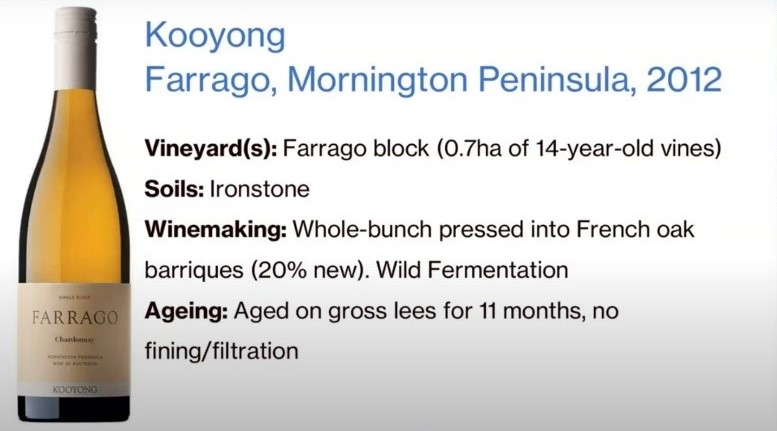
    Wine No.4 – Kooyong Farrago, Mornington Peninsula, 2012 (Down the Hill)

    The second wine from Kooyong is also from a single vineyard and at the bottom of the hill not too far from the ‘Faultline’ vineyard which has ironstone soil. These are 14-year-old vines with a lighter/ mineral feel. There are notes of blossom and cashew nut.

    This year was not as cool or wet as 2011, but it did have a damp spring.

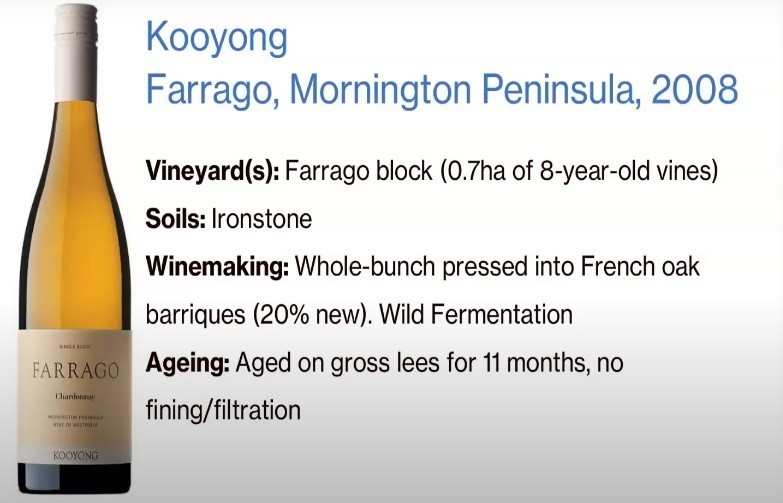
    Wine No.5 – Kooyong Farrago, Mornington Peninsula, 2008 (Down the Hill)

    The final wine from this winery is a much older vintage of 2008. This vintage had a dry season with warmer than average spring and summer. This is the same block as Farrago but has much younger vines of 8 years. Do not be fooled with the age of the vines as there is distinct tertiary notes of mushroom and Brazil nut with the being richer and fattier.

    The journey of going through  the different vintages in Mornington Peninsula from 2008 all the way up to 2018 was so fascinating. Exploring the difference in terroir of Red Hill, with wines from ‘Up the Hill’ and ‘Down the Hill.’ The different climatic changes in rainfall can really affect the wine making them leaner and more acidic.